


by
Tokyo’s Sensoji Temple plans new museum with space for public gatherings
Designed by Atelier Tsuyoshi Tane Architects, the new museum will combine sacred collections, traditional craftsmanship and public gathering spaces, strengthening the connection between cultural heritage and everyday life
A new museum designed by Atelier Tsuyoshi Tane Architects (ATTA) is under development at Sensoji Temple in Tokyo’s historic Asakusa district. Scheduled for completion in 2028, the Sensoji Treasure Museum will preserve and exhibit the temple’s sacred collections while introducing spaces for public gatherings, religious festivals and cultural activities.
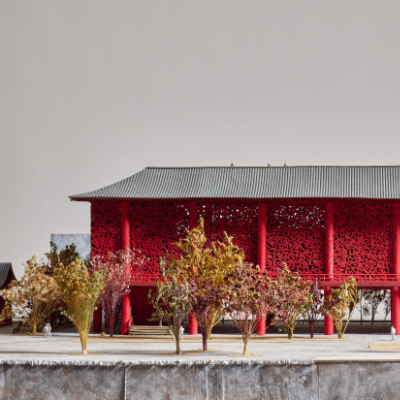
Sensoji Treasure Museum by ATTA. Photo by Frans Parthesius, via metalocus.es
Founded in 628, Sensoji is one of Tokyo’s oldest Buddhist temples and a major cultural destination, attracting approximately 30 million visitors annually. The museum is planned to coincide with the temple’s 1,400th anniversary, marking a new chapter in the development of a religious complex that has remained an important part of the city’s cultural life for centuries.
The project responds to the challenge of introducing contemporary architecture within an active historical setting. Rather than creating a conventional museum separated from its surroundings, the architects have proposed a building that accommodates the movement, ceremonies and collective activities already taking place throughout the temple grounds.
The museum’s elevated structure creates space for public gatherings beneath the building, allowing religious festivals and everyday activities to remain part of the architectural experience.
The design is organised around a horizontal volume raised above ground level, creating an open area that extends the public spaces surrounding the temple. This arrangement maintains connections across the site while introducing a new cultural facility without entirely occupying the ground beneath it.
A continuous corridor running around the building’s perimeter provides another connection between the museum and its surroundings. Conceived as a transitional space, the corridor allows visitors to move along the exterior while maintaining a visual relationship with the temple complex.
The building’s exterior introduces a distinctive architectural element through an elaborate façade of hand-carved red arabesque patterns. The decorative surface draws on traditional craftsmanship, establishing a relationship with the temple’s historical character without directly reproducing its existing buildings.
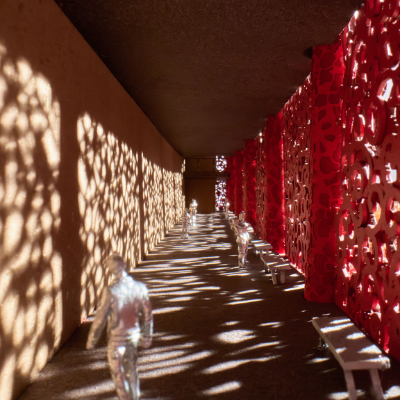
Sensoji Treasure Museum by ATTA. Photo by Frans Parthesius, via metalocus.es
The use of red also connects the new structure to the visual identity of Sensoji, where the colour appears prominently across gates, columns and other architectural elements. Through its combination of contemporary geometry and traditional decorative techniques, the museum seeks to establish continuity between different periods of Japanese architecture.
Inside, dedicated exhibition spaces will accommodate sacred objects and historical collections associated with the temple. The project introduces new facilities for preservation and public interpretation, expanding opportunities for visitors to understand the site’s religious and cultural history.
The museum also reflects the architectural philosophy of Tsuyoshi Tane, whose practice frequently explores the relationship between architecture, archaeology and collective memory. His approach, described as Archaeology of the Future, considers the histories embedded in a place as material for developing contemporary architectural ideas.
At Sensoji, this approach is expressed through the relationship between the new building and the existing religious complex. The design does not seek to recreate historical architecture, but instead draws on the temple’s traditions, materials and patterns of public use to inform a contemporary intervention.
The project’s programme is particularly significant because Sensoji remains an active place of worship rather than functioning exclusively as a heritage destination. Its architecture must therefore accommodate religious practices, tourism and everyday public activity alongside the preservation of historical collections.
The museum’s planned completion in 2028 will coincide with celebrations marking fourteen centuries since the temple’s founding. Its addition represents an investment in cultural infrastructure within one of Tokyo’s most established historical environments.
By integrating exhibition spaces with areas for festivals and collective activities, the Sensoji Treasure Museum demonstrates how contemporary cultural architecture can support living traditions while preserving historical heritage.
For architectural practices working with cultural institutions and historic sites, the project offers an example of how new construction can respond to established patterns of use. Its design highlights the potential for museums to extend beyond their exhibition programmes, creating spaces that remain connected to the communities, traditions and public activities surrounding them.
Further information
METALOCUS – Timeless continuity: Sensoji Treasure Museum by ATTA, September 2026
Divisare – Sensoji Treasure Museum by Atelier Tsuyoshi Tane Architects
 English
 Spanish
 Portuguese
 French
 German
 Italian
 Japanese
 Arabic
 Chinese