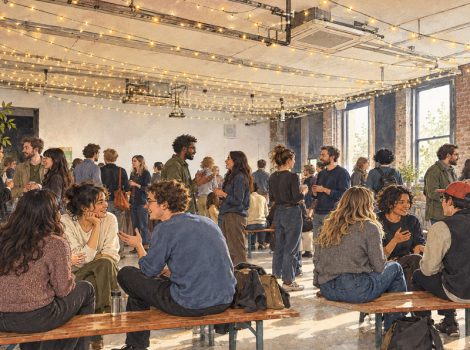
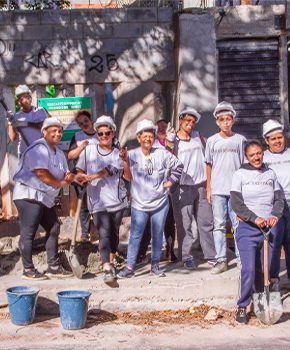
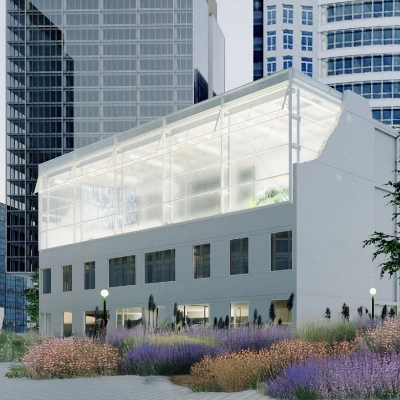
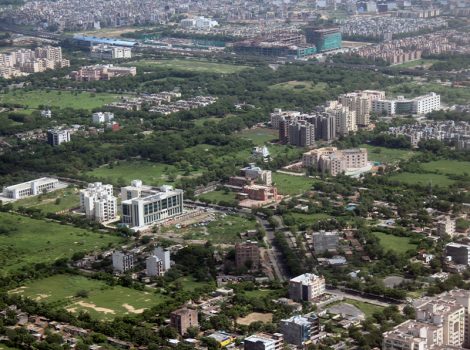
The Minha Casa, Minha Vida boom
Once understood primarily as social housing policy, Brazil's government-backed programme has become a driving force behind the extraordinary residential development transforming the city of São Paulo today>
Creative Business Development Media
/ Architecture
Beedier provides up to the minute information, research, and news relating to business development, communications, and marketing for architects. With our expert reporting you will stay informed, save time and never miss an opportunity.
Architecture studios Oskar and FELT have developed a compelling competition-winning scheme that unites the GO! Academy of Fine Arts and Atheneum on a shared campus in Anderlecht. By preserving valuable heritage structures while introducing light-filled additions, clearer connections and biodiverse outdoor spaces, the proposal creates an inspiring and adaptable environment for learning, creativity and exchange.
Reposted from @oskararchitecten - always with permission.
Oskar en FELT winnen de BMA-wedstrijd voor de restauratie, renovatie en nieuwbouw van de GO! Academie Beeldende Kunsten en het Atheneum in Anderlecht.
De twee scholen komen samen op één gedeelde campus, die doorheen de jaren is gegroeid en een rijke geschiedenis met zich meedraagt. Door het bestaande zorgvuldig te knippen en waardevolle structuren te behouden, ontstaat ruimte voor meer licht, lucht en nieuwe zichten. Ook de kelderverdieping krijgt zo een nieuwe rol.
Heldere assen en nieuwe verbindingen maken het geheel opnieuw leesbaar en verbinden gebouwen, ateliers en buitenruimtes. Tegelijk wordt de verharde site maximaal onthard en vergroend, met ruimte voor tuinen, pleinen en ontmoetingsplekken. Biodiversiteit, waterinfiltratie en klimaatbestendige beplanting versterken het groene karakter van de campus.
Zo ontstaat een toekomstgerichte leeromgeving waar erfgoed en nieuwe ingrepen elkaar versterken. De Academie en het Atheneum behouden hun eigen identiteit, maar vormen samen één campus die mee kan groeien met haar gebruikers.
ism:
@felt.works
Technieken: @abetec_architecten_ingenieurs
Omgeving: @lokus_landscape
Erfgoed: @architectenvs
beelden:
@frame.bxl
voor:
@bouwmeestermaitrearchitecte
#HeritageArchitecture #ArchitectureCompetition #BelgianArchitecture #Beedier #SocialMediaZeitgeist
AIDIA Studio`s competition proposal for the Varna Contemporary Library rises as a stepped, faceted volume wrapped in a shimmering diagrid skin, its terraces cut open to hold gardens of trees high above the Bulgarian city. Inside, cantilevered reading decks float over a luminous full-height atrium, turning the library into a vertical civic room where light, books and public life are stacked together.
Reposted from @aidiastudio - always with permission.
Legacy Project: Varna Contemporary Library 2015 | Competition
#VarnaContemporaryLibrary
#aidiastudio
#Beedier
#SocialMediaZeitgeist
Heatherwick Studio has unveiled its design to reawaken the Belvedere, the 1973 terrace poised between downtown Louisville and the Ohio River, letting a long-hardened edge of the city soften into a richly planted park — shade and trees, room to play, room to slow down, nature returning to the middle of things. At its heart rises the Firefly Pavilion, a fan of slender stems tipped with light and drawn from the summer flight of Kentucky`s fireflies: a civic canopy for concerts, for gatherings, for ordinary evenings, opening in 2030 as a place for the city to come together and follow the fireflies.
Reposted from @officialheatherwickstudio - always with permission.
Revealed: our new design to transform Belvedere, an under-loved public space in downtown Louisville, Kentucky.
At its heart is the Firefly Pavilion, inspired by the dynamic flight of Kentucky’s fireflies.
This distinctive civic structure is designed for everyday community use, as well as larger cultural events.
“It creates a flexible platform for culture, performance and community life, designed to evolve continually with Louisville and its people,” said Stuart Wood, Executive Partner at Heatherwick Studio.
Belvedere originally opened in 1973, positioned between the city’s commercial centre and the Ohio River. Over time, this site became disconnected from city life.
In 2030, it will become “a relaxed and richly planted park, bringing glorious nature back into the heart of downtown,” said Wood.
“More trees and planting provide shade and respite, while generous spaces for play, gathering and relaxation make it a place for every generation to enjoy. A place for Louisville to come together, slow down, discover something unexpected - and follow the fireflies.”
@louisvillebelvedere
Visuals: @estudionod
#LandscapeArchitecture #UrbanDesign #PlaceMaking #Beedier #SocialMediaZeitgeist
Gabriel Neistein have redesigned the José Paulino threshold of Bom Retiro Commercial Centre as a genuine invitation: a portico that draws the sidewalk inward through a measured sequence of spaces, restoring the porosity Lucjan Korngold gave the complex in 1957. Light brought deeper into the section, cobogó screens filtering the sky, shopfronts brought into a single rhythm, and a gradient of colour unfolding along the walk compose a spatial narrative that recovers the original language of the ensemble and makes arrival itself seamless with architecture.
Reposted from @gabriel_neistein - always with permission.
CCBR _ retrofit e acessibilidade
Pórtico de entrada e corredor
desenhos: @alexkfujita
O acesso pela Rua José Paulino foi redesenhado como um convite para quem passa pela cidade adentrar o Centro Comercial Bom Retiro por meio de uma sequência de espaços. O novo projeto luminotécnico, a ampliação da luz natural, a utilização de cobogós, a padronização das vitrines e o gradiente de cores ao longo do percurso constroem uma narrativa espacial que resgata a linguagem original do conjunto e transforma a chegada em uma experiência contínua entre cidade e arquitetura.
#BrazilianArchitecture #SaoPauloArchitecture #Retrofit #Beedier #SocialMediaZeitgeist
Designed by Artform Architects, this Energy Centre scheme, granted planning consent as part of a new energy network in south Manchester, reimagines industrial infrastructure as a striking wedge-shaped building that positively contributes to the streetscape while supporting Manchester`s carbon-neutral ambitions. Combining a double-height CHP volume, administrative spaces, a slender chimney, and cylindrical thermal stores, the design offers a fresh architectural typology that will bring low-carbon electricity, heating, and cooling to a diverse community across south Central Manchester.
Reposted from @artformarchitects - always with permission.
Taking a look back at our Energy Centre project which we successfully gained planning consent for a few years ago. Sadly it still remains unbuilt but we remain hopeful!
The scheme was designed as part of a planned new energy network in south Manchester, assisting local business and residents in reducing carbon emissions, in line with Manchester City Council’s targets to become carbon neutral by 2038.
The new Energy Centre is a wedge-shaped building that consists of a series of interconnected elements – a double height volume containing the main CHP enclosures and plant space, a smaller single storey volume for administrative use, storage and ancillary plant rooms, a chimney for exhaust gases and three cylindrical thermal stores.
Once built it will supply electricity, heating and cooling, to a diverse group of residents and businesses across a 5 sq.km area in south Central Manchester.
The approach to the project was not only to provide a functional shell for the required plant and infrastructure, but to create a building that would positively contribute to the streetscape and offer a fresh new typology that speaks of it’s use and engages with the community.
Image 1 & 2 by the brilliant @haze_viz
.
.
.
#energycentre #carbonreduction #manchester #renderlovers #beedier #socialmediazeitgeist
Led by ACME, this expansion transforms Robina Town Centre from an inward-facing shopping mall into a vibrant, open-air town center anchored by a striking undulating timber-clad market hall. The reversed-nave interior, warmed by honey-toned timber ribs and framed by 55 local traders, spills out into lush, water-featured landscaping that reconnects the community with Robina`s subtropical surroundings.
Reposted from @acmespace - always with permission.
Robina, Gold Coast, Australia
Robina is one of Australia’s first and largest planned communities, founded in 1980 alongside the Gold Coast, famous for its beaches, canals, waterways and subtropical rainforest hinterland. Serving the 25,000 residents, Robina Town Centre was originally constructed as an outdoor grouping of urban blocks containing shops and restaurants facing the lake, but this scheme was lost over the years.
The expansion of Robina seeks to turn it from an inward looking shopping centre into an open and urban town centre. The new spaces are unified by an undulating timber-clad roof creating shaded apertures. A series of south-facing notches brings daylight inside with minimal solar gain. Standing seam zinc is used as an external skin.
Inside, the volume evokes a reversed nave, an impression reinforced by the regular ribs and strips of honey-coloured timber. The market hall sits between two large supermarkets and consists of 55 new traders dedicated to celebrating local/regional production.
The market hall spills out onto a flowing, stepped landscaped area accessible from a new car park, providing a water feature and lush planting.
STRUCTURAL ENGINEER: MPN
CREATIVE DIRECTORS: Seventh Wave London
LOCAL ARCHITECT: The Buchan Group
MEP ENGINEERS: Wood & Grieve Engineers (WGE)
INTERIOR DESIGNER AND BRANDING: Landini Associates
LIGHTING DESIGNER: @seamdesign
LANDSCAPE DESIGNER: @aspectstudios
CONTRACTOR: ADCO Constructions Pty Limited
#RobinaTownCentre #SpacexAcme #TimberArchitecture #MarketHall #RetailDesign #Beedier #SocialMediaZeitgeist
This competition project by NP2F in collaboration with Lauka Architects reimagines the GO! Académie Anderlecht art school as a striking dialogue between industrial heritage and contemporary design, weaving new glass-and-marble volumes, a folded terracotta roofscape, and a rooftop garden into the site`s existing brick warehouses and towers. The result is a vibrant, light-filled campus where soaring studio spaces, sheltered courtyards, and elevated terraces create an inspiring home for students and artists alike.
Reposted from @np2f - always with permission.
GO ! Académie Anderlecht / Ecole d’art avec Lauka studio for architecture, objects and urbanism. Concours
#GOAcademieAnderlecht #ArchitectureCompetition #AdaptiveReuse #Beedier #SocialMediaZeitgeist
Studio by Three has created Noor Café, a striking contemporary landmark set within the historic urban fabric, defined by a monumental terracotta volume that reinterprets the traditional oasis courtyard. Sheltering a serene, palm-filled public space where architecture, climate, and community converge, the project offers a timeless yet bold addition to Dubai`s streetscape.
Reposted from @studiobythree - always with permission.
Noor Café is conceived as a contemporary landmark within the historic fabric of the city. Defined by a monumental terracotta volume, the project reinterprets the traditional oasis by framing a sheltered public courtyard where architecture, climate, and community come together.
#NoorCafe #UrbanOasis #ContemporaryArchitecture #HospitalityDesign #TerracottaArchitecture #Beedier #SocialMediaZeitgeist
Michael Collins Architects is currently progressing infrastructure works on The Dell of Allt Mhor, an experimental Passivhaus nestled in the Cairngorms National Park that beautifully blends traditional stereotomic gabion and stone construction with digitally manufactured timber panelling for a low embodied carbon result. Perched among tiered gabions filled with recycled river stones and salvaged castle rubble, the home`s larch and OSB-clad hall opens onto sweeping views over the bracken-filled valley and hills beyond.
Reposted from @michaelcollinsarchitects - always with permission.
#WIP The Dell of Allt Mhor, Cairngorms national park. Infrastructure works soon to start. A perimeter of tiered gabions sits amongst existing dry stone walls filled with river stones from excavations and recycled stone from a fallen castle in a nearby ‘borrow pit’. This experimental passivhaus mixes traditional stereotomic forms of construction with digitally manufactured timber panels resulting in a low embodied carbon construction. Large bounders used to support a balcony with views over the hills to the west and a bridges linked to the hill behind . Internally a larch and OSB clad hall doubles as a studio immersed in the bracken filled valley. Images in progress by team MCA, model by MCA and Findlay who recently undertook work experience,
#highlandarchitecture #architexture #passivhaus #stonearchitecture #beedier #socialmediazeitgeist
Charles Holland Architects, working alongside MICA Architects, Jeremy Rye, and Terra Firma Landscapes, designed this vibrant new landscaped urban park at College Green in the heart of Croydon has just secured Planning Approval, marking an exciting step toward its delivery phases. Bursting with colour and character, the design weaves together a playful multi-use games area, a lively playground, and inclusive, creatively "misusable" spaces like a dance circle and skateable benches — all set to be further shaped through community co-design workshops.
Reposted from @charleshollandarchitects - always with permission.
College Green
We have been working with @mica_architects, jeremy_rye and @terrafirmalandscapesltd on College Green, a landscaped urban park in the centre of Croydon.
After a long period of development, the project has just been granted Planning Approval and we will shortly be moving into Stage 4 and the delivery phases.
Our role has been to develop specific areas of hard landscaping as well as inputting into MICA’s overall masterplan and design strategy. This has included a multi-use game area (MUGA), a playground, benches and seating as well as some less clearly programmed spaces encouraging diverse and inclusive uses. The latter include a dance/performance circle incorporating song lyrics and lighting and skateable benches that encourage creative (mis)use and appropriation.
The MUGA includes uses pattern and colour rather than lines to suggest rather than prescribe use. A screen depicting the skyline of Croydon forms a backdrop as well as stopping balls landing where they shouldn’t.
Each of these spaces will be further developed via co-design and engagement workshops conceived and run by CHA.
We have worked closely with the design team and Croydon Council on this project and it’s great to see it moving forward. Thanks to MICA for inviting us to be part of their team and for being such open and creative collaborators.
#LandscapeArchitecture #PublicRealm #UrbanPark #Beedier #SocialMediaZeitgeist
DHaus has just launched an exciting new high-rise loft apartment project in downtown Nanjing, drawing inspiration from the raw brutalist concrete structure currently taking shape on site. True to their signature approach, the studio is layering in a rich sense of film narrative, by channeling the atmospheric tension of works like The Brutalist and Midsommar, to imagine the characters and stories that will one day inhabit these striking spaces.
Reposted from @the_dhaus_company - always with permission.
We have just started a new project in China, a high rise loft apartment in downtown Nanjing.
-
We were inspired by the buildings brutalist concrete structure currently in construction.
-
We always try to add a layer of film narrative to our work whether it be A24’s Midsommar or The Brutalist as we like to imagine characters and plots played out in our spaces.
-
#DHaus #China #Downtown #Nanjing #thebrutalist #Beedier #SocialMediaZeitgeist
Peter Morris Architects’ playful extension in Bexley reimagines a typical 1930s suburban home through a joyful blend of Art Deco curves, Arts & Crafts influences and sun-washed pastel tones that bring a distinct holiday atmosphere to everyday living. With sculptural pink rendered forms, generous glazing and a beautifully landscaped garden setting, the project transforms the house into a vibrant and characterful family home full of warmth, light and optimism.
Reposted from @petermorrisarchitects - always with permission.
Here is a design for a rear, side and loft extension for a lovely client in Bexley. Bexley has a wonderful collection of 1930’s suburban developments. There is an interesting mixture of Art Deco and Arts & Crafts styles. With white rendered arches and chunky interlocking tiles.
For the new design I have drawn on these two styles, with an extra bit of holiday feel about it. Wouldn’t it be great to live in a permanent holiday 🌞
If you would like to live in your dream holiday forever, DM @petermorrisarchitects
#petermorrisarchitects
#architecture
#design
#artdeco
#artsandcraft
#beedier
#socialmediazeitgeist
Rural Office’s waterfront intervention in Cardigan transforms the town quay into a generous civic landscape, where stepped seating, robust materials and open public space reconnect the river’s edge with everyday community life. Originally conceived as part of a wider regeneration strategy, the project has matured into a lively and adaptable gathering place that supports seasonal events, informal social use and a renewed sense of identity for the town.
Reposted from @rural_office - always with permission.
Placemaking
It was Barley Saturday in Cardigan, West Wales so a guaranteed crowd for the annual spring event, and a chance to revisit our first public project by the river`s edge.
It was nearly twenty years ago that we stumbled into this commission as part of regeneration proposals for the town scape and waterfront. Much has changed in this period including attitudes to meanwhile uses, seasonal activation and outdoor amenity, so it was with great pleasure that we witnessed such a joyful place being used as it was intended. The remarkable spring weather helped!
It`s not been an easy adoption for the town. No one took ownership for the quay`s maintenance, the skateboarders battered the steps, and adjoining operators damaged the public realm with beer deliveries, but despite these challenges it is a great example of a successful placemaking strategy.
#ruraloffice #placemakeing #publicrealm #beedier #socialmediazeitgeist
Taylor Hare Architects’ concept proposal reimagines a former rural garden site as a landscape-led care community, where timber-clad homes, restored vernacular buildings and shared gardens create a warm, village-like setting rooted in nature and everyday connection. Designed to feel restorative rather than institutional, the scheme places wellbeing at the heart of the architecture through informal pathways, clustered dwellings and immersive landscapes that encourage familiarity, belonging and community.
Reposted from @taylorharearchitects - always with permission.
Concept Design: A Landscape-led Community for Care
Our proposals for reimagining a former rural garden site once defined by cultivation, now hold the potential for specialist care, community and renewal.
A place shaped not as an institution, but as a small village. Homes that gather in clusters and where shared communal spaces sit at its heart. Existing buildings are imaginatively reworked, drawing on the subtleties of the local vernacular, where familiar forms and materials are reinterpreted with care.
New buildings are designed to sit lightly on the land within informal gardens, where paths meander rather than divide, and where care is woven into the rhythms of everyday life.
We believe the future of rural care lies in places that are more human, more connected, and more imaginative. One where wellbeing is shaped as much by landscape, community and familiarity as it is by function.
Not every project finds its way into the world as a building. Some remain as ideas, testing, questioning and imagining what could be.
If you’re considering how a site might become something more thoughtful, and of a more human scale, we’d welcome a conversation.
✍️ @taylorharearchitects
Quote on slide 3 @lauraelee_maggies over image from the film ‘The Secret Garden by Agnieszka Holland
#ResidentialDesign #ContemporaryArchitecture #DreamHomeDesign #Beedier #SocialMediaZeitgeist
John Puttick Associates has completed the new Vault Youth Zone in Preston, delivering a vibrant civic building that forms the final piece of the wider city-centre masterplan anchored by the restored Preston Bus Station and public square. With its folded fibre-cement façade, bold yellow structural accents, and active street presence, the project creates an energetic and welcoming space for young people while reinforcing the area’s strong modernist identity and community focus.
Reposted from @johnputtickassociates - always with permission.
Our project for @vaultyouthzone and @onsideyz is now complete and is featured in the @architectsjournal this month with an article written by @franwillz
The new building is the final component in our masterplan for this part of Preston city centre, which began with the refurbishment of Preston Bus Station. The bus station reopened to the public in 2018, and the new public square completed the following year. The Youth Zone opens onto the public square, and the design uses yellow structural elements and a folded fibre-cement façade to relate to the modernist building opposite and create a bold image young people can identify with.
Photography by @gardnergareth
#johnputtickassociates #preston #architecture #youthzone #communityarchitecture #beedier #socialmediazeitgeist
Stonewood Design approaches sustainability as the foundation of design, creating deeply contextual buildings that integrate low-carbon materials, passive environmental strategies, biodiversity, and community wellbeing from the very beginning. Across projects ranging from museums and workplaces to libraries and adaptive re-use schemes, the work demonstrates a thoughtful “Mean, Lean, Green” philosophy that balances technical performance with beauty, cultural connection, and a light touch on the landscape.
Reposted from @stonewooddesign - always with permission.
For us, sustainability is not a layer added at the end of a project - it is where every project begins.
Operational and embodied carbon matter deeply, but we take a wider view of what makes a place truly sustainable: health, happiness, culture and community.
Our approach is simple - Mean, Lean, Green. Reduce energy demand first, design efficient fabric, and only then consider renewables.
We work with low-carbon materials that have long histories - timber, stone, hemp, rammed earth, thatch, oak shingles - and with the natural conditions of a place: landscape, sun, air and water.
Our Story of Gardening Museum received a RIBA South West Sustainability Award, but awards are not the goal. The goal is something simpler: to make buildings that tread lightly and belong to their place.
Projects shown: Story of Emily Museum / Story of Gardening Museum / Roman Villa Museum / Workplace Project / School Library / Creative Re-use Project
#SustainableArchitecture #LowCarbonDesign #BiophilicArchitecture #Beedier #SocialMediaZeitgeist
Leonard Design is leading the transformation of Jersey’s iconic Fort Regent, reimagining the Grade I listed Napoleonic fort as a vibrant contemporary leisure and entertainment destination while carefully preserving its historic character. Defined by dramatic civic interiors, immersive public gathering spaces, and a rich mix of cultural, sporting, and family-focused amenities, the redevelopment brings new life to the landmark through inclusive design, dynamic social programming, and sensitive architectural intervention.
Reposted from @leonard_design - always with permission.
We’re proud to announce our involvement in the redevelopment of Jersey’s most significant historical asset, converting Fort Regent from a neglected 1970’s leisure centre into a modern and exciting leisure and entertainment destination, set within a Grade 1 listed Napoleonic military fort.
The scheme includes a 2,500-capacity arena, six-screen cinema, tenpin bowling, e-gaming, and indoor adventure play activities. Externally, the Fort will benefit from a new children’s nursery, skatepark, pump track, play areas with sensory play, parkour zone, and a nature/heritage trail, supported by enhanced landscaping to provide inclusive activity spaces for all ages and abilities.
The site has presented a number of technical challenges, dealt with sympathetically and creatively alongside a talented multi-disciplinary team including @ridgellp, @spacehubdesign, @charcoalblue, and @gt_llp
#HeritageArchitecture #LeisureDesign #UrbanRegeneration #Beedier #SocialMediaZeitgeist
Rose Hip Yard by Tom Bestwick transforms a former storage yard into three sculptural courtyard homes defined by faceted green zinc roofs, lofty vaulted interiors, and a rich palette of brick, timber, and expansive glazing. Set around lush private gardens opening directly onto Tooting Common, the project combines light-filled contemporary living with sustainable timber construction, high-performance envelopes, and energy-efficient heat recovery systems.
Reposted from @tom.bestwick - always with permission.
🌹ROSE HIP YARD🌹
Three unique new build houses located off Rose Hip Lane where once lay an old storage yard.
The gable ended and faceted green zinc roofs of the houses mimic the old yard and the four metre vaulted ceilings beneath these roofs create airy and spacious volumes, leading to a sense of openness.
The three houses face south looking onto lushly planted gardens with a private gate that opens directly onto Tooting Common where you’ll find acres of green space including tennis courts, outdoor swimming pool, football pitches, tennis courts, playgrounds….you name it!
Large solar controlled glazing draws in huge amounts of daylight whilst the carefully designed greenery provides privacy between each dwelling.
Beautiful brick walls wrap the exterior of the development and the garden facing walls are clad in a softer European larch, completed with moss green window frames.
The structure of each house is constructed from timber. This locks in carbon dioxide and creates highly insulated and airtight dwellings which are thermally efficient, helping to reduce the carbon footprint, which is vital to sustainable living.
Exhaust Air Heat Pumps heat the buildings by reusing energy from waste air providing heating, ventilation, heat recovery and hot water efficiently, simply and economically.
.
.
.
.
.
.
#archilovers #architecturedesign #modernhome #courtyardhousing #sustainablearchitecture #propertydevelopment #wandsworth #contemporaryarchitecture #modernarchitecture #architecturestudent #architectureportfolio #archviz #architecturalvisualization #conceptarchitecture #designconcept #architecturepresentation #zinc #timberhouse #beedier #socialmediazeitgeist
GRID Architects has secured planning consent for Grove House in Hammersmith, transforming a 1940s office building into a vibrant 171-room hotel that combines elegant retrofit architecture with welcoming public amenities, affordable workspace, and lively event spaces. Framed by refined façades, generous planting, and carefully crafted interiors, the project demonstrates how adaptive reuse can create a sustainable and characterful destination while giving new life to an existing urban building.
Reposted from @grid_architects - always with permission.
Another milestone for GRID
Planning consent secured for Grove House, Hammersmith—transforming a 1940s office building into a 171-room hotel with new amenities, event space, and affordable workspace.
Building on our retrofit work at Park Royal and Brixton, this project highlights the value of reusing existing buildings for a more sustainable future.
#AdaptiveReuse #Retrofit #Sustainability #Architecture #Hospitality #Beedier #SocialMediaZeitgeist
GPAD London has secured planning permission for Ransome’s Dock in Wandsworth, a refined 65,000 sqft mixed-use retrofit that introduces five distinctive saw-tooth homes above the existing warehouse buildings, drawing elegantly on the site’s industrial heritage with bold red metal forms and generous terraces. The scheme thoughtfully revitalises the courtyard with biodiverse planting and mature trees while enhancing commercial spaces and circulation, creating a vibrant and enduring place for residents and tenants alike.
Reposted from @gpadlondon - always with permission.
Planning permission has been granted for Ransome’s Dock, a 65,000 sqft mixed use scheme for RD Developments in Wandsworth.
Five new homes placed above the existing warehouses are arranged in a saw-tooth form, drawing on the area’s industrial character. Above the original roofscape, light filled interiors, dramatic volumes and generous external spaces, will create unique dwellings in the sky. The courtyard will also be transformed, introducing biodiverse planting and mature trees that will create a place that can be shared and cherished by the diverse mix of residents and tenants.
The proposal evolves a previous consent, adapting it to meet new regulations, improving the arrival experience, refining commercial spaces, and refreshing the design. A deep understanding of the site acquired over a number of years’ work has informed our approach. Careful adaptations and interventions facilitate the new development, including the insertion of a new access core, and the overhaul of the site’s servicing.

Ransome’s Dock reflects our commitment to adapting existing buildings, increasing their lifespan and value through thoughtful design interventions.
Team: Constructive, Rolfe Judd Planning, Consil UK, Bespoke Fire, Caneparo Associates, Mason Navarro Pledge Ltd, Jackson Hickey Consulting Engineers, Core Five
#DesigInCommon #Battersea #retrofit #planninggranted #beedier #socialmediazeitgeist
KRFT Architects, in collaboration with Nicholas Hare Architects, designed the Richard Cairns Building at Brighton College as a sculptural performing arts venue where expressive brick forms (crafted from handmade, high-quality Petersen Tegl bricks) curve and cantilever to embody movement and rhythm. Set between historic neo-Gothic structures and open fields, the building elegantly bridges past and present through its material richness and fluid geometry, creating a distinctive and welcoming cultural heart for the campus.
Reposted from @petersentegl - always with permission.
The Richard Cairns Building, Brighton College, Brighton, UK
The Richard Cairns Building at @brightoncollegeuk , UK, is a compact performing arts building where movement is embedded directly into the architecture. Designed for dance, theatre, and music, its curved brickwork appears to stretch and sway, giving the façade a clear sense of rhythm and lightness.
Placed centrally on campus between Gilbert Scott’s 19th-century neo-Gothic building and the sports fields, the building acts as both connector and contemporary counterpart. Sweeping curves, cantilevers, and arches subtly reference the historic context, echoing pointed arches and rose windows without imitation.
Brick plays a key role in this dialogue between old and new. Both façades and roof are clad in Petersen bricks (F563, C563), allowing the building to read as one continuous
volume. At ground level, flint, a material rooted in Brighton’s coastal geology and the original college buildings, is reintroduced before gradually giving way to brick.
The bricks were custom-developed to reflect the varied tones of flint, from light and sandy to dark and almost black. The result is a surface that feels weathered rather than new,
robust enough for the coastal climate, and distinctly geological, as if carved from the cliffs themselves.
Client: @brightoncollegeuk
Architect: @krft_arch in collaboration with @nha_llp
Completed: 2024
Brick: F563, C563
Photos: @stijn_bollaert (1-6) and @edmundsumner (7-12)
…
#petersentegl #petersenbricks #brickarchitecture #brightoncollege #beedier #socialmediazeitgeist
Acme`s masterplan for Cambridge North transforms a historic rail-side industrial landscape into a vibrant, future-focused urban quarter, anchored by a new station and a network of streets, squares, and green spaces that echo the scale and character of Cambridge. The project brings together life science innovation, housing, and generous parkland with water-sensitive landscapes, creating a lively, resilient community where architecture, public life, and ecology are seamlessly integrated.
Reposted from @acmespace - always with permission.
Cambridge North, Cambridgeshire
Cambridge North has a 100-year history of track welding. Today, it is one of three new city quarters identified to support UK’s growth as a world leader in Life Sciences. Network Rail opened the railway station in 2017, planting the initial seed for redevelopment on the brownfield site. By 2050, approximately 20,000 inhabitants will live here.
The masterplan for the new town centre creates a network of streets and public spaces extending into the future context, using proportions familiar to Cambridge. A cluster of Life Science buildings are located against the edge of the railways, while residential buildings are arranged around a large park, alongside existing allotments.
The central square between these two character zones defines the heart of this new community, activated by retail and community uses. Design guidelines provide rules for setbacks in massing, materiality and articulation of facades to create a townscape that belongs to Cambridge.
The Cam River Valley is a critical zone for flooding and groundwater management, and great care has been taken to create an urban landscape that is open and permeable for rainwater. Innovative water management strategies, such as rain gardens, swales, and a large balancing pond within a proposed wild park, achieve a balance of water demand and supply 💧
Client: Chesterton Partnership
Collaborating Architect: @make_architects
Landscape Architecture: @robertmyersassociates
Planning: @bidwellsllp
#spacexacme #cambridge #masterplan #archilovers #architecture #beedier #socialmediazeitgeist
Studio MUTT’s transformation of 91 Kempston Street reimagines a modest industrial building as a vibrant, adaptable workspace, marked by bold red fenestration and playful architectural detailing that bring new life to the street. The project skillfully combines creative reuse with energy upgrades and flexible interiors, showcasing how overlooked structures can become dynamic hubs for making and working.
Reposted from @studiomutt - always with permission.
Delighted to share we have been Shortlisted for the @architectsjournal Small Projects Award 2026 for our office on 91 Kempston St. amongst good company. 🎉
Photographs by Jim Stephenson (1+3) / Studio MUTT (2)
This transformation of a 1970s light industrial unit, previously an underused storage facility for a hat factory, has created flexible workspaces together with a modern light industrial workshop.
The existing structure was robust but unloved, characterised by flat brick elevations, small pillbox windows, uninsulated roofs and deep floorplates.
The project future-proofed the fabric with upgraded roof insulation and low-energy services. The primary elevation now boasts a theatrical canopy, scalloped coping and red and pink high-performance fenestration and doors.
Internally, the layout has been reconfigured to accommodate multiple occupancy. The ground floor retains its use as a CNC workshop, which is accessed via a rear goods entrance.
The first floor has been refurbished as a contemporary workspace, with brickwork painted a warm white to maximise light. A central utility block comprising a kitchen, bathrooms and shower divides the space into flexible front and rear studios. Enlarging an existing opening has created a new full-height, south-facing window featuring a large slider for ventilation. Redundant roof vents have been turned into mirror-lined rooflights to enhance daylight penetration.
The project is a testbed for the wider regeneration of Liverpool’s Fabric District, prioritising energy efficiency, and showcases the potential for reusing modern industrial buildings.
#creativereuse #architectsjournal #workspace #fitout #fabricdistrict #beedier #socialmediazeitgeist
Knox Bhavan’s Rigg Beck is a beautifully grounded hillside dwelling whose elongated, gently curving roofline echoes the surrounding fells while unfolding to capture light and expansive valley views. Carefully embedded within its landscape, the house combines crafted stone and timber forms with near off-grid systems to create a sustainable, quietly expressive retreat.
Reposted from @knoxbhavan - always with permission.
Rigg Beck
The simple form of the house and its roof responds and reflects the profile of Causey Pike above it. As it runs down the hill more floors emerge until the east end of the house where it is three storeys high, its ridge centred on a line drawn from the top of Cat Bells mile to the east. This enables the principal rooms to collect south light and enjoy views.
Geothermal bore holes, ground source heating, solar collectors, and a water bore hole allow the house to function almost entirely off-grid.
Architect: @knoxbhavan
Photographer: Brian Ormerod
#ArchitecturalDesign #SustainableArchitecture #GeothermalEnergy #ModernArchitecture #CauseyPike #Beedier #SocialMediaZeitgeist
As well as publishing Beedier, our team at Woodburn Park Communications works with architectural clients of different scales, and through a diverse range of projects – from bids, to social media, awards, websites, books and films. Here is a selection of our recent client work…
Our Brixton based start-up client MOST Architecture, were invited to pitch concept proposals for the complete re-design of an exhibition centre in South Korea for Hyundai. We assisted with graphic design layouts, film production, architectural drawings, story-boarding and translation.
We are always on the lookout for great new clients, and interesting projects. If you need help or advice with your architectural communications and business development, then please get in touch: info@woodburnpark.com
More>>This content is only available to active subscribers. Please log in or subscribe to view.