


by
Three historic cinemas seek public funding for restoration in central São Paulo
Once important gathering places in São Paulo's cultural life, the city's historic movie theatres now face the challenge of preservation and adaptation. A municipal funding programme could support their recovery, connecting architectural heritage with broader efforts to revitalise the city centre
In central São Paulo, three former cinemas are seeking financial support to recover their buildings and potentially return to cultural use after years of closure and changing patterns of urban development.
The Cine Copan, Cine Ipiranga and Cine Jussara are among 24 properties registered for the fourth round of the city’s Economic Subsidy Programme, which supports the restoration and adaptation of older buildings in the central district.
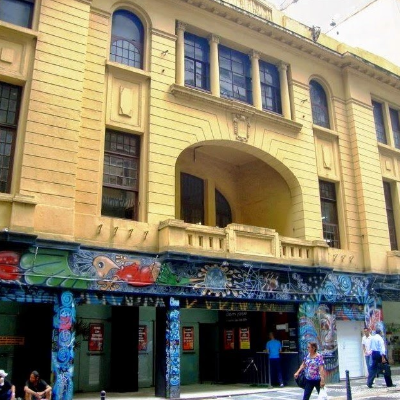
Cine Dom José, former Cine Jussara (1951-1967). Via cinemasdesp2.com.br
Announced in October 2026, the programme makes R$200 million, approximately US$37 million, available to subsidise up to 25% of eligible renovation costs.
The initiative forms part of a broader municipal strategy to encourage investment in underused properties, preserve architectural heritage and introduce residential, cultural and commercial activities into areas with established urban infrastructure.
The three cinemas represent an important chapter in São Paulo’s architectural and cultural history, when large screening rooms and street-level theatres contributed to the social life of the city centre.
Among them is Cine Copan, located within the celebrated residential complex designed by Oscar Niemeyer, one of the most recognisable examples of Brazilian modernist architecture.
Unlike the other cinemas, Cine Copan already has a restoration project supported by a partnership announced in February 2026 between Nubank and Viva do Brasil, the organisation responsible for the venue’s revitalisation.
Renamed Nu Cine Copan, the venue is scheduled to reopen in 2027 as a multipurpose cultural space, with approximately 440 seats, modern projection technology and facilities for festivals, performances and public events. Its restoration is being financed through a combination of private investment and cultural sponsorship, while its participation in the municipal programme represents a separate application for additional public support.
Cine Ipiranga, designed by architect Rino Levi as part of the Hotel Excelsior complex, represents another significant example of São Paulo’s twentieth-century cinema architecture. Cine Jussara, later known as Cine Dom José, occupies a building designed by Alfredo Mathias and Giancarlo Palanti.
The proposals could return these spaces to public use, introducing contemporary cultural activities while preserving architectural features associated with their original functions.
Beyond restoring individual buildings, the initiative raises the possibility of recovering part of São Paulo’s historic cinema network as cultural infrastructure within the existing urban fabric.
The three cinema proposals are part of a wider group of applications that includes historic hotels, former banking institutions, residential buildings and other properties of architectural significance.
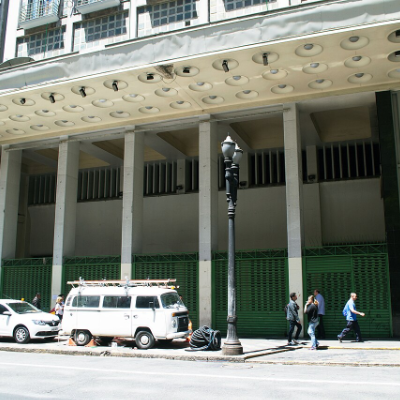
Facade of the former Cine Ipiranga, now closed. Matheus Bianezzi, CC BY-SA 4.0, via Wikimedia Commons
Half of the 24 submissions are primarily residential, while six incorporate social housing. Together, the proposals anticipate 828 housing units, illustrating how the programme combines cultural preservation with broader urban development objectives.
The funding model is particularly relevant because the economic viability of renovating historic buildings can be affected by structural deterioration, technical requirements and the cost of adapting older spaces to contemporary regulations.
By contributing to eligible construction expenses, the municipality aims to make projects that might otherwise remain financially difficult more attractive to property owners and investors.
However, registration in the programme does not guarantee funding or construction. The proposals must still pass the selection process, and the final architectural interventions will depend on the approved plans and available resources.
The initiative also raises questions about how restoration incentives can balance private investment with public access, cultural continuity and the needs of existing communities.
For architectural practices, the programme highlights opportunities involving conservation, technical feasibility studies, building adaptation and partnerships between public authorities, cultural operators and property owners.
The possible recovery of São Paulo’s historic cinemas demonstrates how targeted financial incentives can support architectural preservation while reopening discussions about the cultural role of existing buildings in changing city centres.
As the municipality evaluates the submissions, the outcome will help determine whether these former entertainment venues can once again become active parts of São Paulo’s cultural landscape.
Further Information
São Paulo Municipal Government – Fourth Economic Subsidy Call and 24 Retrofit Proposals
Folha de S.Paulo – Historic Cinemas and Other Buildings Seek Restoration Incentives
Exibidor – São Paulo’s Historic Street Cinemas Seek Funding to Reopen
 English
 Spanish
 Portuguese
 French
 German
 Italian
 Japanese
 Arabic
 Chinese