


by
Rome invites international architects to shape the future of Galleria Borghese
One of Italy's most celebrated art museums has launched an international architectural competition to expand its cultural facilities and improve visitor access. The initiative opens opportunities for architectural practices worldwide while raising questions about how contemporary design can coexist with Rome's historic and protected landscapes
In Rome, the Galleria Borghese is looking beyond its historic exhibition rooms to address the growing demands of one of Italy’s most important cultural institutions. On 14 October 2026, an international architectural competition was launched to explore the expansion of the museum’s facilities within the historic setting of Villa Borghese.
The initiative is promoted by engineering company Proger, acting as technical sponsor of the museum, with the support of the Municipality of Rome.

Il Ratto di Proserpina by Gian Lorenzo Bernini, located in the Galleria Borghese, via tiqets.com
Housed in a seventeenth-century villa originally commissioned by Cardinal Scipione Borghese, the museum is renowned for its collection of sculptures by Gian Lorenzo Bernini and paintings by Caravaggio, Raphael and Titian.
Despite its cultural importance, the institution faces limitations in exhibition capacity, visitor services and accessibility. A considerable part of its collection remains in storage, while the existing spaces offer limited flexibility for educational activities, conferences and temporary exhibitions.
The competition seeks proposals for a facility of up to 3,000 square metres, potentially involving the adaptation of existing buildings or the introduction of a carefully integrated contemporary structure within the park.
The programme is expected to accommodate exhibition areas, restoration laboratories, educational spaces and improved visitor facilities.
The central architectural challenge is to expand the museum’s cultural possibilities without compromising the historical, environmental and landscape qualities that make Villa Borghese significant.
The competition places particular emphasis on sustainable construction, energy efficiency and accessibility, requiring proposals to consider the preservation of existing trees and the ecological balance of the surrounding landscape.
This approach also highlights the increasingly complex relationship between heritage conservation and the contemporary operational needs of major cultural institutions.
The selection process will take place in two stages. Internationally qualified architects and multidisciplinary teams can submit their credentials and initial methodological approaches until 13 November 2026.
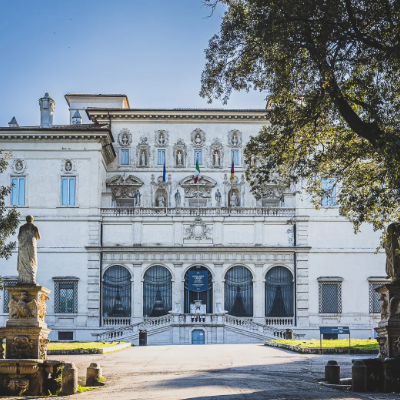
Galleria Borghese, via saturdaysinrome.com
A maximum of five finalists will then be invited to develop architectural proposals, with the winning design expected to be announced by 14 May 2027.
The winner will receive €500,750, approximately US$580,000, as a combined prize and fee for completing the technical and economic feasibility design. The four other finalists will each receive €25,000.
Beyond the project itself, the competition illustrates how cultural institutions are increasingly seeking architectural expertise to address changing expectations around public access, environmental performance and the use of existing heritage assets.
For architectural practices, Galleria Borghese represents an international opportunity to explore how cultural expansion, conservation and contemporary design can be reconciled within one of Europe’s most sensitive historic environments.
The outcome could also contribute to wider discussions about the future of museums operating within buildings and landscapes originally designed for very different purposes.
Further Information
Galleria Borghese – Official architectural competition
Proger – International architecture competition announcement
 English
 Spanish
 Portuguese
 French
 German
 Italian
 Japanese
 Arabic
 Chinese