


by
Matsumoto transforms historic buildings into spaces for contemporary art
Historic buildings across Matsumoto, Japan, have become exhibition venues for an international art festival. Opened on 3 November, the event brings new cultural activities into former shops, traditional residences and architectural landmarks

Matsumoto Architecture + Art Festival 2026 Advance poster, via visitmatsumoto.com
Historic buildings across Matsumoto, Japan, have become exhibition spaces for an international architecture and art festival, bringing contemporary installations into former shops, traditional residences and cultural landmarks. The second phase of the Matsumoto Architecture Art Festival 2026 ADVANCE opened on 3 November, transforming existing spaces into venues for art while encouraging visitors to explore the city’s architectural heritage.
Running until 13 December, the festival presents 19 exhibitions by 18 Japanese and international artists across 18 buildings and facilities. The programme includes teamLab, Lee Ufan and Julian Opie, with installations distributed between Matsumoto’s historic castle town, former shopping streets, the Asama Onsen district and the city’s western heritage area.
Rather than constructing new exhibition venues, the festival uses Matsumoto’s existing architecture as an active part of the artistic experience.
Among the participating locations is Kappo Matsumotokan, a registered cultural property where teamLab presents a digital installation inside the Phoenix Room. The work occupies a historic interior decorated with traditional sculptures and ceiling paintings, bringing contemporary projection-based art into direct contact with the building’s craftsmanship.
Another exhibition takes place inside a former Catholic priest’s residence, where works by Lee Ufan are displayed. Elsewhere, an abandoned souvenir shop in Asama Onsen hosts an installation by Mihoko Ogaki, while the former Matsumoto District Court building accommodates a nine-metre-long sculpture made from salt by Ken and Julia Yonetani.
The selection of venues extends beyond recognised architectural landmarks. Vacant commercial buildings, former institutional spaces and structures associated with local traditions are incorporated into the programme, giving visitors access to places with different histories and functions.
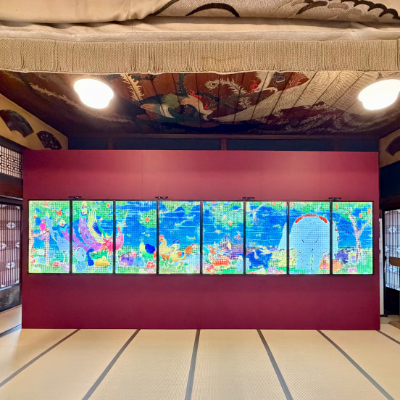
Digital artwork 世界は、統合されつつ、分割もされ、繰り返しつつ、いつも違う (The World Integrates, Divides, Repeats and Is Always Different), by teamLab (2013), on display at the historic 割烹松本館 (Kappo Matsumoto-kan) during the Matsu-moto Architecture + Art Festival, via bijutsutecho.com
The festival also treats movement between buildings as part of the experience. Streets and narrow alleys connect the exhibitions, encouraging visitors to discover neighbourhoods that may otherwise receive less cultural attention.
By temporarily opening buildings to new activities, Matsumoto demonstrates how cultural programming can create public interest in existing architecture without requiring permanent redevelopment.
The 2026 edition expands into Asama Onsen, a historic hot-spring district where former commercial and cultural buildings have been incorporated into the exhibition route. Its inclusion extends the festival beyond the central city and introduces visitors to different parts of Matsumoto’s built heritage.
For architectural practices, the initiative offers an example of how temporary cultural uses can support building conservation, public engagement and relationships between property owners, artists and local institutions.
The festival also demonstrates how architecture can contribute to cultural tourism without depending on new landmark developments. Existing buildings become both exhibition spaces and subjects of discovery, creating opportunities to reconsider their value and potential future uses.
Matsumoto’s approach suggests that cultural events can play a role in sustaining architectural heritage by bringing people back into buildings and encouraging new relationships with the city.
Further information
Matsumoto Architecture Art Festival – Official 2026 programme
 English
 Spanish
 Portuguese
 French
 German
 Italian
 Japanese
 Arabic
 Chinese