


by
Expo 2030 Riyadh builds a vast design supply chain
With 230-plus pavilions planned beneath a six-million-square-metre masterplan, Riyadh’s World Expo is emerging as a major international market for architects
Expo 2030 Riyadh is not a single architectural commission. It is becoming an unusually large design and delivery ecosystem, with different layers of work extending from masterplanning and infrastructure to public realm, national pavilions and potentially hundreds of individual buildings.
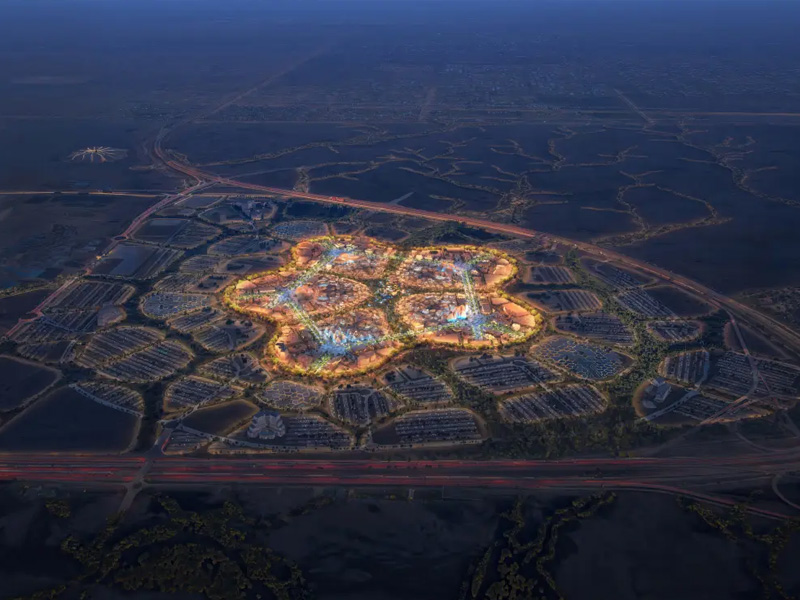 The scale is substantial. Running from October 2030 to March 2031, the Expo is planned across approximately six million square metres, with 197 participating nations, more than 230 pavilions and over 42 million visits expected. After the event, the site is intended to transition into a permanent Global Village, making legacy planning integral to its development rather than an afterthought.
Expo 2030 Riyadh is not a single architectural commission. It is becoming an unusually large design and delivery ecosystem.
That ecosystem is already visible in the way the masterplan is being taken forward. LAVA led the original masterplanning team and has subsequently been retained as its “Custodian”, an unusual designation intended to maintain the overarching design concept as the project moves into detailed design and implementation.
Alongside it, Buro Happold was appointed lead design consultant in December 2025, responsible for the detailed masterplan and detailed design of the public realm, landscape, infrastructure and utilities, together with technical support during construction. The commission explicitly encompasses both the six-month Expo and its longer-term legacy.
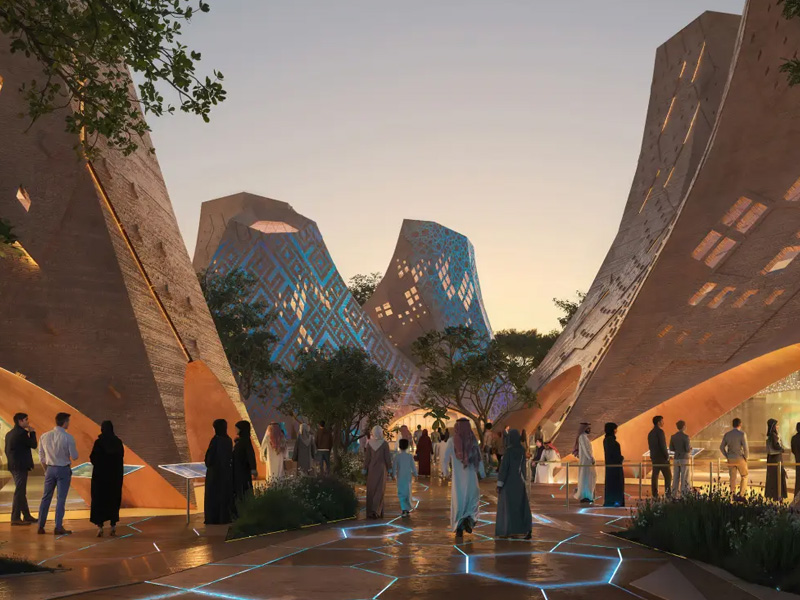 For architects looking at Riyadh from outside Saudi Arabia, however, the more interesting question is what sits below these headline appointments. World Expos create a procurement tree rather than a single competition. Masterplanners and engineering consultants establish the framework, while participating countries and organisations must assemble their own teams to commission, design and deliver pavilions. Those teams can involve international architects, national commissioning bodies, local partners, specialist designers, engineers, contractors and delivery architects.
For practices pursuing Expo work, understanding who controls each branch of the procurement tree may matter as much as knowing who designed the masterplan.
With more than 230 pavilions anticipated, Riyadh therefore represents a significant pipeline of architectural work distributed between many different clients and procurement routes. The opportunity is also a useful reminder that major international events need to be tracked well before individual architectural competitions become visible. Mapping participating nations, commissioning bodies, local partnerships and emerging consultant teams can reveal opportunities several stages before a conventional tender notice.
For practices considering Saudi Arabia, Expo 2030 Riyadh is consequently worth watching not simply as a megaproject, but as a developing architectural market in miniature.
Further information
Expo 2030 Riyadh – official website
Buro Happold appointment – Expo 2030 Riyadh
 English
  Spanish
  Portuguese
  French
  German
  Italian
  Japanese
  Arabic
  Chinese