


par
Osaka’s Tamurakoma Opens Corporate Museum to the Public
A 130-year-old textile company is using Osaka’s architectural open-house festival to introduce its newly established corporate museum to a wider public, opening a new space for exploring the company’s industrial heritage and its connections to the city’s manufacturing history
Japanese textile company Tamurakoma will open its newly established corporate museum to the public for the first time on 24–25 October 2026, using Osaka’s annual architectural open-house festival to make more than a century of commercial and design history accessible beyond its business network.
Located on the ground floor of the company’s Osaka headquarters, the Tamurakoma Museum opened on 13 October. It brings together textile designs, historic documents and company artefacts tracing the business’s development since its establishment in 1894. Normally accessible by prior arrangement to business partners and invited visitors, the museum will admit the public free of charge during IkeFes Osaka, without advance reservations.
Tamurakoma is using an architecture festival to transform a private corporate archive into a temporary public cultural resource.
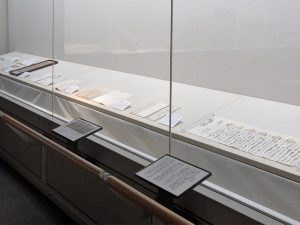
Image: Tamurakoma Co., Ltd.
The collection includes early company records, wartime documents and approximately 50 historic textile patterns presented in an exhibition titled Forest of Designs. Displays also explore the company’s former professional baseball team, which operated between 1936 and 1953 and won Japan’s inaugural Central League championship in 1950.
Photographs documenting changes to the company’s headquarters provide a further connection to Osaka’s commercial heritage. Situated in the historic Semba district, the headquarters was designed by Tohata Architects and completed in 1990. Its inclusion in the festival places the company’s collections within a wider exploration of the city’s architectural and industrial development.
Organised annually, IkeFes Osaka opens buildings that are not ordinarily accessible to the public, connecting residents and visitors with the city’s architectural history. The 2026 programme includes 224 participating buildings and sites, according to the organisers’ August programme figures.
For Tamurakoma, participation provides an opportunity to communicate its institutional history through physical space and archival material, rather than conventional corporate exhibitions or promotional campaigns. The museum presents textile production, design and commercial history as subjects of wider cultural interest.
The project illustrates how existing corporate spaces and collections can become cultural assets without requiring an entirely new public building.
The initiative also points towards opportunities for architects, exhibition designers and communications specialists working with established businesses. Corporate archives, historic premises and collections can support programmes of interpretation, adaptive reuse and public engagement, particularly when connected to established cultural events.
Beyond its two-day opening, Tamurakoma offers a modest but transferable model for making private heritage publicly accessible. For practices working across architecture and communications, it demonstrates how the cultural value of an existing workplace can be developed through exhibition design, storytelling and carefully programmed public access.
Informations complémentaires
 English
 Spanish
 Portuguese
 French
 German
 Italian
 Japanese
 Arabic
 Chinese