


通过 罗伯特2号公园
Who Will Design Britain’s Ports? Inside the ABP Professional Services Tender
Associated British Ports has launched an eight-year professional services framework covering everything from marine engineering to town planning - with applications closing 21 August
Associated British Ports (ABP), the UK’s largest ports operator, has gone to market for a new Professional Services Framework worth an estimated £75 million, seeking architects, engineers, planners, project managers and environmental consultants to support its operations at 21 ports around Britain over the next eight years.
The Procurement Specific Questionnaire (PSQ), published on 22 July 2026 under reference CS-GRP-25/1088, is open to any interested firm – applicants do not need to be an existing ABP supplier. Submissions close at 1pm on 21 August 2026.

The Dock offices at Grimsby | David Wright
A company built on Britain’s trade
ABP was constituted under the Transport Act 1981 and has operated as the Statutory Harbour Authority for 21 ports ever since, its roots lying in the old British Transport Docks Board which were privatised in the early 1980s.
Between them, the ports handle roughly a quarter of the UK’s seaborne trade, support an estimated 119,000 jobs, and contribute some £7.5 billion a year to the economy, moving around £150 billion of goods in the process under the banner “Keeping Britain Trading.”
The ports carry local weight too: Plymouth’s Millbay Docks has long been the Brittany Ferries link to France and Spain, the Humber ports remain tied to historic fishing and bulk-cargo trades, and South Wales’s Port Talbot is increasingly bound up with the region’s shift away from heavy steelmaking. Subsidiaries UK Dredging and ABPmer extend the group into maintenance dredging and marine environmental consultancy, both for ABP and third-party clients.

Southampton Docks | Geni, CC BY-SA 4.0, via Wikimedia Commons
Why now?
The framework’s timing looks tied to a live investment cycle. ABP has reportedly completed a wharf and terminal upgrade at Millbay Docks, developed a Lowestoft base for offshore wind construction, and is progressing a floating offshore wind hub at Port Talbot, under a group-wide “Ready for Tomorrow” strategy said to target roughly £2 billion of decarbonisation and energy-transition investment by 2040.
What the framework covers
Work will be split across seven lots, two of which are further divided into national and regional sub-lots – nine bidding entries in total:
Lot 1 (A & B) – Project Support Services
Lot 2 (A & B) – Design & Engineering Services
Lot 3 – Architecture Services
Lot 4 – Strategic Planning Services (incl. DCO/NSIP consenting)
Lot 5 – Local Planning Services
Lot 6 – Property Services
Lot 7 – Environmental Advisory Services (marine and landside)
The “B” sub-lots, plus Lot 5, are reserved for regionally based suppliers across four groupings: Humber, East Anglia, Southampton and South Wales. This gives SMEs and regional practices a route in alongside national players. Design & Engineering is expected to take the largest share of spend (35%), followed by Project Support (26%) and Environmental Advisory (14%).
Appointment guarantees no work, as commissions will be let separately as call-offs under NEC4 Professional Service Contracts. The PSQ confirms these call-offs may follow direct award, a light-touch mini-competition, or a full competition, depending on value and complexity, though the fuller rules sit in an appendix not covered here.

Heritage buildings at Port of Goole | Paul Glazzard / Salt & Pepper, Goole
An “Open Framework” under the new procurement regime
The tender runs as a Competitive Flexible Procedure under the Procurement Act 2023, structured as an Open Framework, a mechanism new under the Act that lets fresh suppliers in at set points rather than locking the market out for the full term. ABP intends to reopen competition twice, around years three and six; existing suppliers reportedly aren’t guaranteed automatic carry-over at each reopening.
The first stage of application – this PSQ – tests legal, financial and technical eligibility and screens for exclusion grounds, including checks against the government debarment list. Compliant applicants are scored against three technical questions (relevant experience, client integration, capacity/geographic coverage: weighted 50/20/30) and ranked by lot, with roughly three shortlisted applicants carried forward per available place. Stage 2 tenders are then assessed on quality and price.
What applicants need to submit
Applicants register on ABP’s In-Tend portal and submit their PSQ response as a single Excel workbook, with supporting evidence for scored questions as separate, cross-referenced PDFs. The questionnaire runs across five parts: confirmation of core supplier data on the government’s Central Digital Platform; exclusions information for the applicant and any “associated persons”; a list of intended subcontractors; pass/fail questions on financial, legal, health and safety, environmental and supply-chain standing; and the three scored technical questions above.
ABP has also built AI governance into the process: bidders must disclose any AI use in preparing their bid, and ABP itself may use AI tools to triage responses, while stating no applicant will be excluded or scored on automated assessment alone.
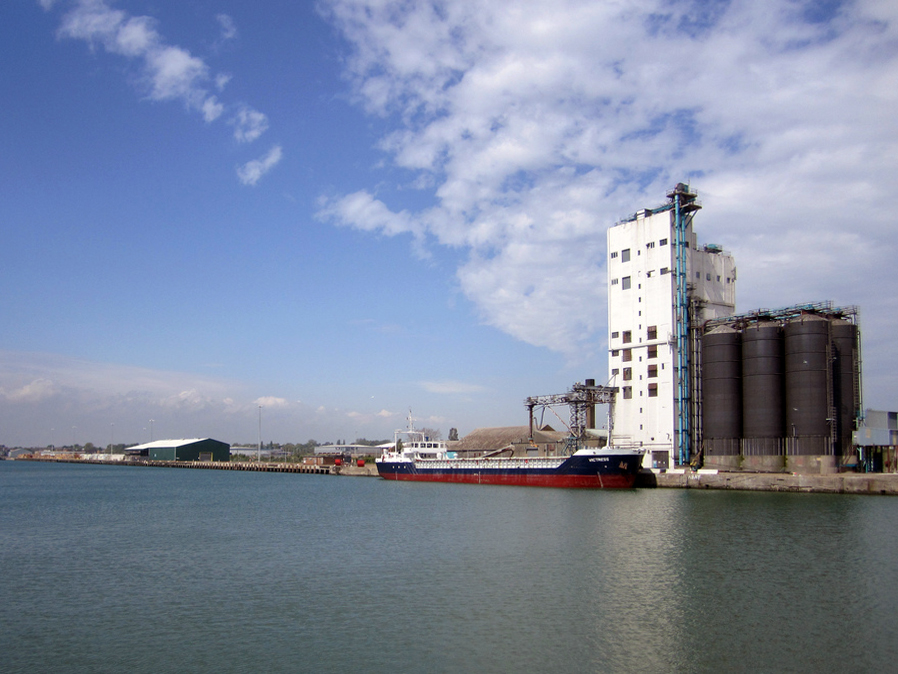
Lowestoft Harbour | Blue Square Thing, CC BY-SA 3.0, via Wikimedia Commons
Timeline
Following the 21 August deadline, ABP expects to notify Stage 1 results by 9 October 2026, issue invitations to tender in mid-October, and complete governance approvals by March 2027, with framework commencement targeted for 3 May 2027.
For a market watching several public bodies bring forward multi-lot frameworks this year, ABP’s stands out for its scale, its SME-facing regional lots, and its early use of the Procurement Act 2023’s Open Framework provisions – likely to be watched closely by other authorities considering the same route.
 English
  Spanish
  Portuguese
  French
  German
  Italian
  Japanese
  Arabic
  Chinese