


The case for open design competitions
Competitions demand sacrifice, yet they offer rare visibility, creative freedom, and the chance to shape architectural discourse beyond credentials. Beedier's Business Development Research, Thalles Cance, offers some perspective, and some recommended current open opportunities
The early years of an architectural career are rarely glamorous. Young architects face the challenge of building credibility, finding commissions, and carving out a voice in a crowded profession. In this landscape, open design competitions have long served as both a proving ground and a stage, a place where ideas matter more than credentials, and where creativity can, for once, eclipse seniority.
Yet the perennial question remains: are these competitions worth the time, energy, and financial strain? Or are they a professional lottery ticket, with too few winners and too many disillusioned participants? The truth, as with most things in architecture, is more nuanced. Competitions are neither a golden path to success nor a futile gamble. They are what young architects choose to make of them and therein lies their enduring relevance.
Visibility on Global Scale
Competitions remain one of the few arenas where an relatively unknown designer can share the same platform as a Pritzker laureate. Even shortlisted entries often find their way into exhibitions, publications, and digital networks, creating visibility that is otherwise difficult (if not impossible) for early-career architects to achieve. In an era where image circulation defines reputation, this kind of exposure can be career-defining.
Laboratories for Growth
Competitions demand a rigor and clarity that everyday practice rarely requires. They force participants to distill complex ideas into sharp narratives, to communicate across cultures and juries, and to produce work that resonates visually and conceptually.
They sharpen the architectural voice. And perhaps more importantly, they foster a willingness to experiment, to test bold ideas without the constraints of a client brief or commercial risk. For young architects, this freedom is invaluable.
Engaging with Urgent Themes
The best competitions are not isolated academic exercises; they engage with the pressing issues of our time. Climate resilience, adaptive reuse, urban inclusivity, the reinvention of public space… these are not marginal topics but central to the future of the discipline. By participating, young architects place themselves within this global dialogue, signalling both curiosity and responsibility. In doing so, they begin to shape not only their careers but also the broader trajectory of architectural discourse.
The Weight of Investment
There is no avoiding it: competitions demand extraordinary time and energy. Nights, weekends, and holidays become consumed by a speculative pursuit that may never yield recognition. For those in small practices or working independently, the sacrifice often comes at the expense of paid work or personal well-being.
Financial Strain
While many open calls keep entry fees low, hidden costs accumulate quickly: software upgrades, printing, model-making, and the simple opportunity cost of weeks spent on non-billable design work. For young architects already navigating financial precarity, this can feel less like an opportunity and more like a gamble.
Uncertain Outcomes
Even excellent work can slip through the cracks. Juries are subjective, submissions are abundant, and recognition is never guaranteed. For every celebrated winner, there are countless talented entrants left questioning whether the effort was worthwhile. This uncertainty is both the beauty and the frustration of competitions: they are inherently unpredictable.
Real Commissions vs. Conceptual Prizes
Not all competitions are created equal. Some open calls culminate in real commissions, leading directly to built projects and long-term client relationships. These opportunities allow young architects to transition from speculative proposals to tangible impact, embedding their ideas into the urban fabric. Others are strictly conceptual, awarding cash prizes, recognition, and status but without the promise of construction. While the latter may seem less consequential, they still serve as powerful platforms for experimentation, visibility, and portfolio building.
Understanding the distinction helps emerging architects decide where to invest their time: chasing built outcomes or cultivating reputation and creative growth.
Finding the Balance: A Strategic Approach
So should young architects dive in? Yes, but strategically. The key is to treat competitions not as blind wagers but as deliberate exercises. Select calls that resonate with your values, interests, or professional trajectory. Collaborate with peers, both to share the workload and to enrich the creative process. And most importantly, view each submission as more than a ticket to win: see it as portfolio content, as a research exercise, to sharpen your architectural identity.
Competitions in Practice: Current Arenas of Opportunity
Beedier has picked out five ongoing open design competitions from our curated list. You can check all of them on our Open Design Competitions field on the website.
University of Chemistry and Technology Building at Victory Square, Prague
The University of Chemistry and Technology in Prague (VŠCHT Praha) has launched a competition for a new campus building on Vítězné náměstí, anchoring the forthcoming Fourth Quadrant development. The project will integrate teaching spaces, laboratories, offices, and public facilities while connecting the existing campus with the new urban fabric. Designs must respond to the square’s historic context and embrace sustainability, innovation, and inclusivity. It is a call for architecture that binds past and future, civic identity and scientific progress. With an estimated project value of €56 million, the competition offers a total prize fund of €285k. The first stage deadline is 3 October 2025.

Vienna’s New Secondary School
Consider the recent competition for the New Allgemeinbildende Höhere School in Vienna, launched by Austria’s Federal Real Estate Company. The call sought designs for a secondary school in Floridsdorf that would integrate administrative, educational, and sports facilities while respecting woodland and zoning requirements. Six teams will advance to a second round, each receiving €35k. For emerging practices, this is more than a speculative exercise, it is a tangible chance to shape the fabric of a city. And that, perhaps, is the ultimate reward competitions offer: the possibility of impact. The first stage submission deadline is 22 October 2025.

MICROHOME #10
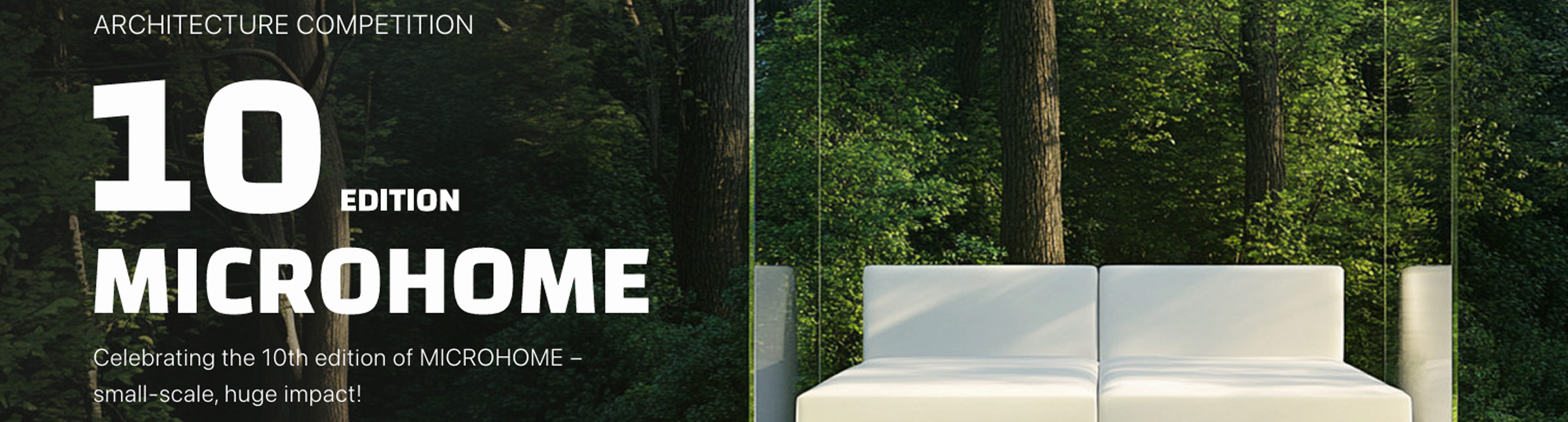
The 10th edition of MICROHOME, organised by Buildner with ArchDaily and Kingspan, invites architects and designers to create a sustainable, off-grid modular microhome of no more than 25 m² for a young professional couple. The competition offers a €100k prize fund, including €20k for 1st place, €10k for 2nd, €5k for 3rd, a €5k Student Award, €30k and three €5k Kingspan Awards, plus a €15k Hapi Homes Award. Beyond global publication and visibility, the Hapi Homes Award winner will see their project constructed, making this not only an ideas competition but an opportunity for real-world impact. It asks a pressing question: how can architecture respond to the global housing crisis with elegance and sustainability? Registration closes on 25 September 2025; submission deadline: 29 October 2025.
architecturecompetitions.com
Faculty of Fine Arts Expansion, Porto
The University of Porto has launched an open design competition for the expansion of the Faculty of Fine Arts (FBAUP) in the Bonfim district of Porto, Portugal. The project calls for innovative proposals that enhance teaching, research, and cultural facilities, while integrating sustainably with the historic campus and urban fabric. The winning team will be directly commissioned to deliver the full project, with a design services contract valued at €468k and a construction budget of €10.4 million. Prizes of €15k and €10k will be awarded to the second and third placed entries, with honourable mentions also foreseen. The submission deadline is 11 November 2025.

Living Ruins II: Rediscovering the Ghost Village of Dereiçi, Mardin
An international open design competition has been launched to reimagine Dereiçi, a historic Assyrian Christian ghost village in the Tur Abdin region of Mardin, Turkey. Once known for its vineyards, churches, and traditions of cultural coexistence, the site now lies abandoned. The competition calls for sensitive proposals to transform the village into an open-air museum and visitor centre, integrating walking routes, landscape interventions, and architectural strategies that respect the layered cultural and historical fabric. With an emphasis on cultural tourism, slow tourism, and memory preservation, the brief challenges architects to balance conservation and contemporary use. Submissions are due by 30 January 2026.

Open competitions are not perfect. They consume time, drain resources, and often yield disappointment. But they also provide something rare: a platform where young voices can rise above hierarchy, where creativity can take precedence over reputation, and where architecture can be tested in its purest: through ideas. For young architects, the choice is not whether competitions are worth it, but how to make them worth it. Enter them with strategy, treat them as laboratories, and embrace them as opportunities to grow. In a profession increasingly defined by collaboration and global dialogue, open competitions remain one of the most democratic and inspiring avenues for the next generation of architects.

Thalles Cance combines a background in Architecture and Urbanism with academic studies in Economy and Politics. At Beedier, he focuses on bidding and competition research and content development, bringing cross-disciplinary insight into the challenges and opportunities shaping architectural careers.