


by
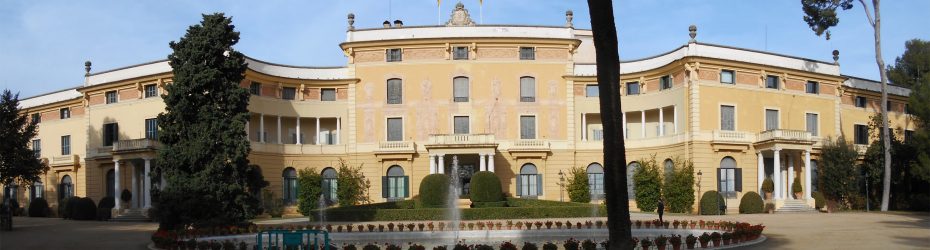
Palau de Pedralbes Restoration, Barcelona
A two-stage architectural design competition for the full restoration of the Palau de Pedralbes, a protected cultural landmark in Barcelona, Spain.
The project involves the comprehensive rehabilitation of the main Palau de Pedralbes building, a Bé Cultural d’Interès Nacional (BCIN) listed heritage asset situated within the historic gardens of Pedralbes in the Les Corts district of Barcelona. The aim is to restore and repurpose the building to accommodate the second seat of the Government of Catalonia, preserving its architectural heritage while upgrading its facilities and integrating modern sustainable systems. The site encompasses 13,440.89 m² of built area within a walled park of 73,166 m², including landscaped gardens and ancillary pavilions. The rehabilitation will cover both interior and exterior restoration, conservation of heritage elements, and modernization for public institutional use.
Location
Sector
Heritage / Conservation / Government Building
Intervention
Renovation
Website
Tender Portal
Tender Stage
Open design competition
Deadline
28 Nov 2025
Project Value/Scale
€2.3 million (estimated service fee)
Consultant Team
Lead architect (author of the project)
Architectural restoration specialist (heritage-qualified)
Structural engineer
Building services (MEP) engineer
Health and safety coordinator
Energy efficiency / sustainability consultant
Landscape architect (for garden and surroundings)
Quantity surveyor / cost estimator (for subsequent negotiation phase)
Architectural restoration specialist (heritage-qualified)
Structural engineer
Building services (MEP) engineer
Health and safety coordinator
Energy efficiency / sustainability consultant
Landscape architect (for garden and surroundings)
Quantity surveyor / cost estimator (for subsequent negotiation phase)
Submission Criteria
3 teams will move forward to the next phase.
Each shortlisted team will receive a € 5k honorarium.
1st Stage Deliverables:
– Signed declaration of compliance with participation and eligibility requirements
– Confirmation of authorship, independence, and absence of conflicts of interest
– Curriculum vitae of the lead architect and collaborators
– Proof of professional registration (COAC or equivalent professional body)
Portfolio of relevant experience, including at least:
– One completed rehabilitation of a Bien Cultural de Interés Nacional (BCIN) with a minimum PEM of €1 million
– One additional rehabilitation/restoration project with a PEM ≥ € 500k
– Statement of roles and responsibilities within the team
Technical Proposal:
– Functional diagrams showing access, circulation, and spatial relationships
– Summary table of areas (existing and proposed usable areas)
– Outline heritage strategy describing intervention criteria on façades, roofs, and interiors
– Anonymous digital submission in PDF format following the PSCP portal technical requirements
Explanatory report (maximum 5,000 words):
– Description of the main architectural idea, objectives, and intervention approach
– Explanation of the functional organisation and spatial coherence
– Description of sustainability and accessibility principles
Drawings and diagrams (up to DIN-A1 format):
– Site plan showing the proposal’s integration within the Palau and gardens
– General floor plans (all levels)
– Representative elevations and at least one section
– Conceptual 3D axonometric or perspective views illustrating the proposal
2nd Stage Deliverables:
Refined and scaled drawings:
– Detailed general plans, sections, and elevations
– Characteristic construction and restoration details
– Integration of new functions, circulation, and access solutions
– Architectural model or 3D representation (physical or digital) illustrating the volumetric and material approach
Heritage and Technical Documentation:
Detailed intervention report outlining:
– Conservation principles for heritage elements (façades, roofs, interiors)
– Material strategy and compatibility with the protected structure
– Integration of new installations within heritage spaces.
Preliminary technical report describing:
– Construction techniques and sustainability measures
– Energy efficiency and environmental strategies (in line with Catalan standards)
– Accessibility and safety compliance
Functional and Programme Development:
– Refined functional layouts demonstrating adaptability and future flexibility
– Updated summary of floor areas
– Circulation diagrams and external–internal relationship analysis
Economic and Phasing Information:
– Indicative cost estimate (based on the projected works)
– Outline implementation or phasing plan indicating sequence and duration of works
Presentation Material:
– Graphic panels (DIN-A1) and accompanying explanatory text (PDF)
– Optional digital presentation or video summary if requested by the jury
– Team Clarifications (upon request) – Participation in a jury presentation and Q&A session (if convened)