


per
Kenya seeks infrastructure plans for refugee towns
A World Bank-supported consultancy will develop road, drainage and mobility plans for Dadaab-Hagadera and Kakuma, reflecting a shift towards long-term urban planning in refugee-hosting communities
Kenya has opened a consultancy opportunity to prepare municipality-wide road and stormwater infrastructure masterplans for Dadaab-Hagadera and Kakuma, two settlements whose development challenges extend well beyond their origins as refugee-hosting locations. The assignment forms part of the World Bank-supported Second Kenya Urban Support Program (KUSP II), which is strengthening municipal planning and infrastructure delivery.
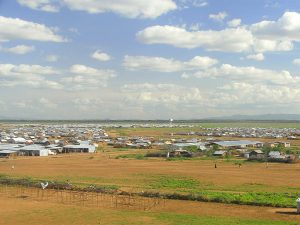
Existing built environment | Photograph by Matija Kovač, 2010
The request for expressions of interest, published under procurement reference KE-MOTI-573511-CS-QCBS, seeks integrated infrastructure plans and the identification of two priority road corridors with associated stormwater drainage and non-motorised transport systems. Submissions close on 2 December 2026 at 10am East Africa Time.
Two of Kenya’s best-known refugee-hosting settlements are becoming the subject of conventional municipal infrastructure commissions.
Dadaab-Hagadera, in Garissa County, and Kakuma, in Turkana County, have developed substantial residential, commercial and community infrastructure over decades. Their inclusion in the programme reflects a wider shift towards planning settlements as functioning urban environments, with infrastructure intended to support both refugees and surrounding host communities.
The consultancy also addresses practical questions about how infrastructure should be prioritised. Roads and drainage need to respond to existing settlement patterns, local movement, environmental conditions and future growth. Integrating pedestrian and other non-motorised transport networks offers a means of addressing accessibility alongside more conventional engineering requirements.
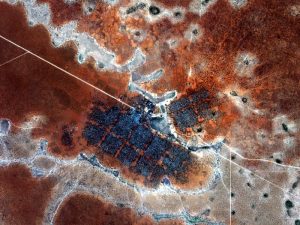
Sentinel-2A satellite image of 11 February 2016 showing the refugee camp Hagadera in Dadaab, Kenia | Credit: Copernicus Sentinel data 2016
The commission follows other planning initiatives in the two municipalities. In 2026, UN-Habitat supported a collaborative basemap exercise for Dadaab-Hagadera, bringing together geographical data and local knowledge to document buildings, roads and public facilities. Such groundwork can help establish a more informed basis for future infrastructure investment.
In refugee-hosting municipalities, the architectural challenge increasingly includes the permanent infrastructure of everyday urban life.
The current procurement uses quality- and cost-based selection, making this a defined consulting opportunity rather than a speculative development announcement. It is particularly relevant to multidisciplinary teams combining urban planning, civil engineering, transport design and climate resilience expertise.
For practices working internationally, the project illustrates how humanitarian settlement programmes can develop into longer-term municipal commissions. The opportunity lies not simply in improving individual facilities, but in planning the systems through which established communities continue to function and grow.
Ulteriori informazioni
Kenya Urban Support Programme II – Tenders and opportunities
 English
 Spanish
 Portuguese
 French
 German
 Italian
 Japanese
 Arabic
 Chinese