


From practice to podcast: how community-led development shapes better places
Becca Thomas, director of place at Civic, discusses her podcast A Building for Your Community and how community-led development reshapes architectural practice, decision-making and power
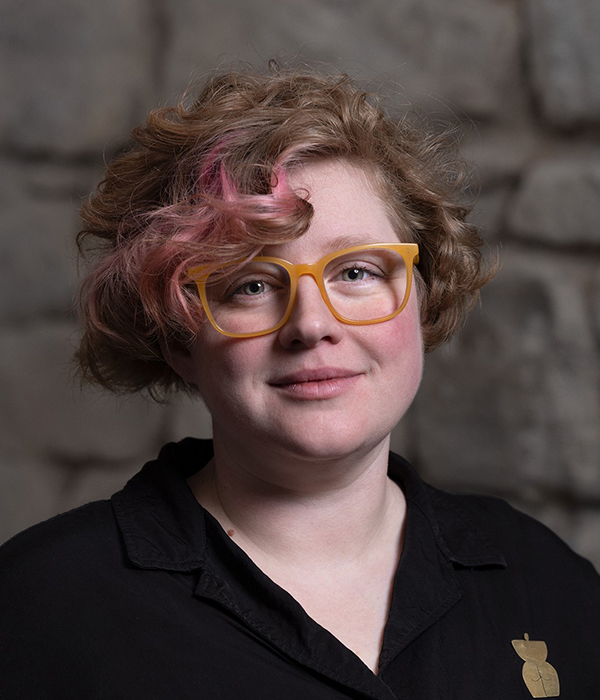
Born out of a pause in construction during the pandemic, A Building for Your Community is both a podcast and a practical resource for anyone curious about community-led development. In this interview, Becca Thomas, director of place and architect at Civic, reflects on how the series evolved from a live project in Glasgow into a wider exploration of shared learning, alternative models of practice and the realities of designing with communities across the UK.
Beedier: How did the idea of making the podcast come about?
Becca Thomas: The podcast is a development of a previous project. We were due to start building a community-led development in Glasgow called Kinning Park Complex when construction was halted because of Covid. We used the enforced gap in the project to put together conversations with our client as a resource that might be useful for other prospective community clients in Scotland.
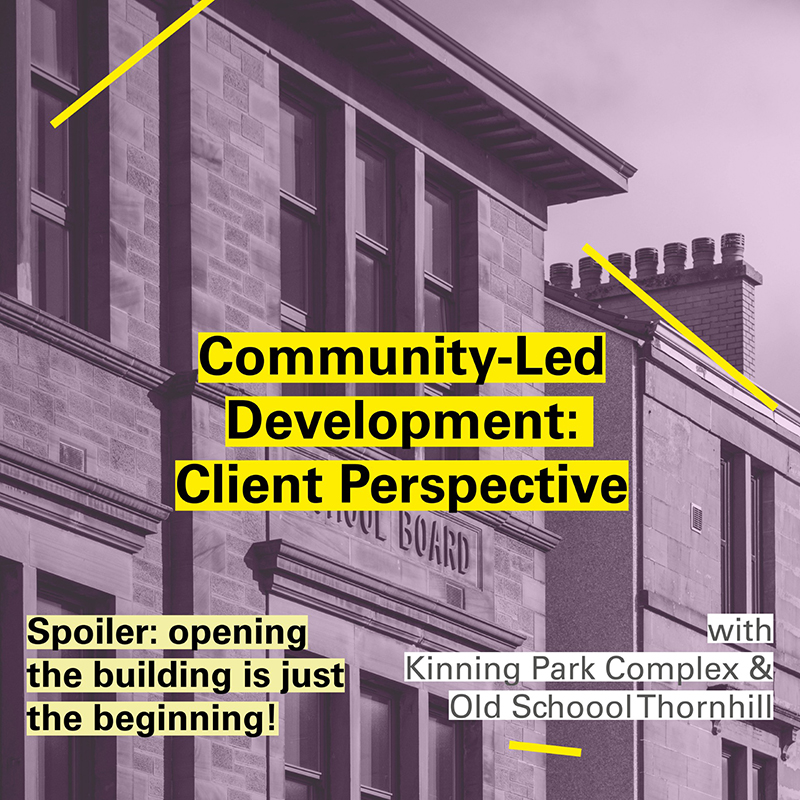 We started off with a series of questions that were co-built with Kinning Park Complex – what do they think they needed to know? What didn’t they understand? What do they wished they’d known before work started on site? That became a PDF, then a newsletter, then a website, and the podcast comes off the back of that as a way of telling those and other stories, in an audio format.
It’s all in the vein of understanding that shared learning and knowledge transfer is a huge part of a community-led project.
Beedier: How do you decide on the community-led development theme?
Becca: Community-led development is what we do. It’s how we’ve built the practice. I think the idea that people are disconnected from the design decisions that affect their lives, whether that’s their homes, their neighbourhoods, their community spaces, is wrong. Our work is about building practices that bring people into those decision-making spaces. This just felt like a natural progression from that.
Beedier: What content did you want to explore?
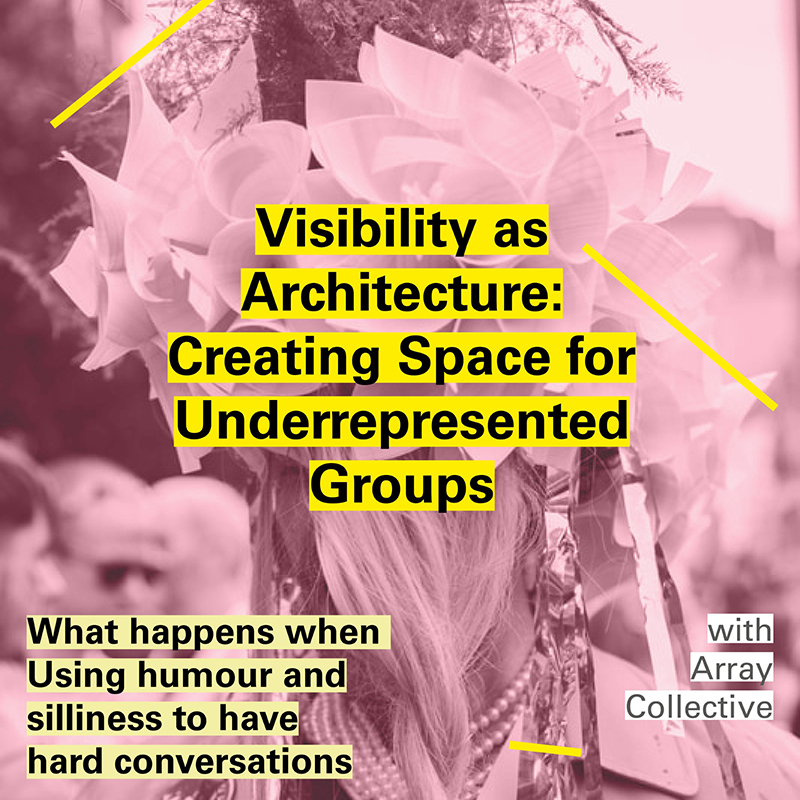 Becca: The podcast allowed us to explore more than the Scottish context by looking at other community models of working across the UK.
With Cristina Cerulli of Studio Polpo in the north of England, we wanted to explore what social enterprise means in architecture. We decided to speak to the Northern Irish group Array Collective, because they come at space from a really different perspective. They run art studio spaces, they’re looking at making live-work spaces for artists in Belfast, and they also think about taking up space and what that looks like as a kind of activism. As community-led housing is not something that we deliver, I knew we wanted to interview someone who worked in that area so we chose Mellis Haward of Archio, who completed a Community Land Trust project in Lewisham, south-east London, co-designed by its occupants.
We knew we wanted the client perspective as well. The final conversation is with two organisations in Scotland who have gone through similar processes and come out with completely different answers – Old School Thornhill in Dumfries and Galloway and Kinning Park Complex, which brings us full circle back to the original document. We particularly wanted to talk about the challenge of opening and running a building, because that’s a different thing entirely to doing the capital redevelopment.
Beedier: How hard was it to put the content together?
Becca: The thing that took a long time was forming the right scripts.
There’s a beginning and an end that’s very scripted, and then there’s a conversation in the middle, which is also scripted in a looser sense.
Understanding what we wanted to get out of each of those conversations, and what we wanted the shape of the whole season to feel like took a long time to get right.
We had a wonderful research assistant join us from Central St Martin’s who helped us over the summer, and we worked with a producer, Halina Rifai, to help shape the actual audio and make it feel professional, polished, and publishable, and less like a conversation recorded on Zoom. The series took a year and a half altogether.
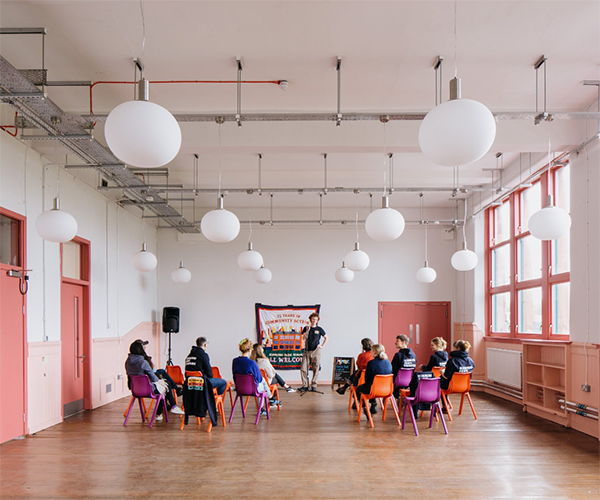
Kinning Park Complex (Photography by Will Scott)
Beedier: Does hosting a podcast come naturally to you?
Becca: No – I’m an architect, not a journalist. But when I’m speaking to people, I can lean into a lot of the skills that I’ve developed in practice such as public speaking and doing community engagement. The hardest part is sounding like you haven’t written a script when you have. I love a podcast. I listen to them all the time. So this feels like a comfortable medium for me.
Beedier: What themes do you think come through particularly clearly?
Becca: Timeliness – doing things at the right time. But also, nothing is quick here. There’s lots of moments for things to happen, and then be rethought. Briefs always shift. We develop briefs as design teams, and then they flip and change as soon as the buildings open, or as soon as someone else takes ownership.
All these spaces and all these communities have to be resilient and open to change. They’re designed to create a space for other things to happen, and it’s the action that’s most important, not the building.
One of the things that was really important to me was to talk openly about money and funding, and how that links and impacts on all the decisions you make. Cristina at Studio Polpo is really interested in money as a way of understanding projects, even though that’s not something she’s interested in making in the same way as for-profit practices are. I’ve always found her perspective really valuable – she’s thinking about the whole system and what that looks like from an economic perspective. We live and exist within late-stage capitalism, so we have to be able to exist within that system, even if we are trying to buck that trend.
Beedier: What do you hope the series will achieve?
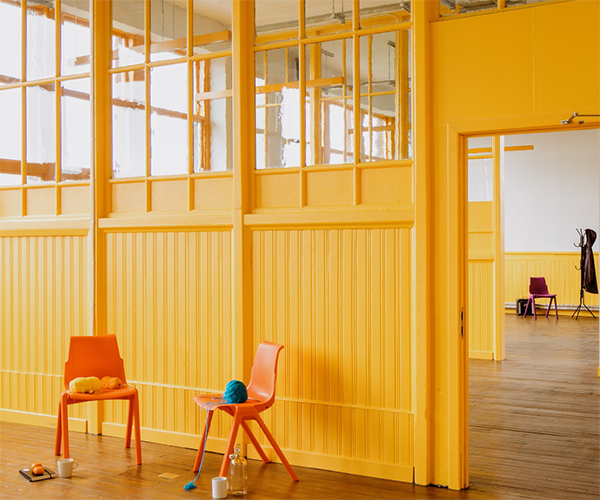
Kinning Park Complex (Photography by Will Scott)
Becca: I hope it might achieve some further conversation, both for myself, but more generally within the industry. Choosing who you work for, how you work for them, and what you build as an architect is really important. And if you’re in a position to choose, I think you can make really powerful, wonderful choices. We need to build less, we need to build more carefully, we need to reuse more.
Beedier: Do you think that doing this series will inform your own work?
Becca: I think it definitely will. It’s an area that I obviously feel very comfortable in, and have spent 15 years developing a specialism in, so for me it was about deepening my knowledge and expanding my understanding of different specialisms as well.
Beedier: Who do you hope’s going to listen to it?
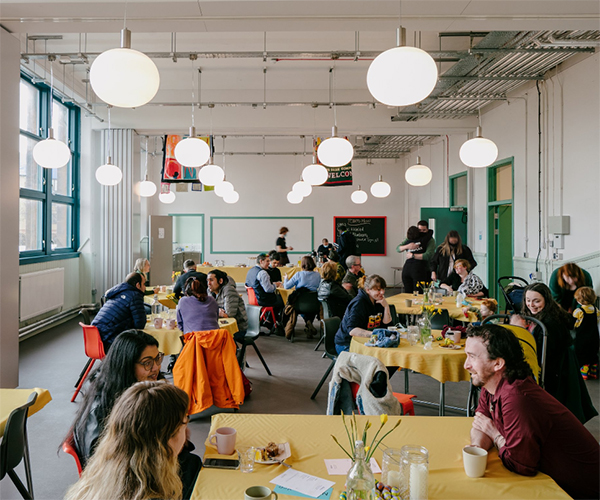
Kinning Park Complex (Photography by Will Scott)
Becca: I want architects, urban designers and placemakers to listen to it, because I want them to think about expanding their practice. I think the more people there are who are working in different ways, the better. The expansion of what architects can do can be really useful. And even if you’re working in a more corporate space, understanding that there are different models of practice, is, I think, useful. I also want laypeople, and by that I mean anyone who’s not an architect or a placemaker, to listen. Often when we’re doing the sort of community engagement work that we do, we hear a lot from people who don’t know how to be involved. That’s who the resource was always aimed at – giving a sense of what that journey might look like if you chose to be a community client. The podcast pushes out to a more design-led audience to start them thinking about this practice type as well.
Beedier: Do you think the podcast will help to raise the profile of your own practice at all?
Becca: Perhaps. If it connects us to new clients, that would be a wonderful side benefit, but it’s not the purpose of it. More broadly, just speaking about how I think placemaking and architecture should be done is really important in terms of thought leadership.
Beedier: Are there plans for any more series of the podcast?
Becca: I’m currently thinking about Season 2, which might explore what accessible and inclusivity in the built environment might look like from an engagement perspective and from a building perspective. I hope to launch it in autumn 2026.
For Season 3, I’d like to think about how young people are involved in the development of our cities and our places, and explore ways that we as a practice, and others, are engaging young people in the design of spaces, and making them better.
Becca Thomas is Director of Place and an architect at Civic, and a founding director of New Practice. She leads community engagement and placemaking work, with extensive experience delivering complex cultural, civic and community-led projects, and serves on the Glasgow Urban Design Panel. The podcast “A Building for Your Community” is available on Spotify and Apple Podcasts.