


بواسطة صوفيا علوي شاهد
The best networking happens where your clients are
For architects and design practices, the most valuable professional connections are not always made at industry events. Understanding where potential clients gather, who makes decisions and when opportunities emerge can help practices build relationships and identify projects before a formal brief exists
An architect comes back from a networking breakfast with three business cards, a photo for LinkedIn and an invitation to meet the same people again next month.
It felt productive. But most people in the room were other consultants, and no one was there to commission a building.
That isn’t a reason to stop going. Industry events build reputations, referrals and collaborations. The trouble starts when a practice counts attendance as business development without asking who it actually met.
So before booking the next ticket, answer a harder question: who is your client?
“People who need an architect” won’t do. Nor will “homeowners” or “commercial clients”. A family weighing up a self-build, a school planning an extension and a restaurant group opening its second site face different pressures, answer to different decision-makers and appoint architects in entirely different ways. Each also reaches the moment when your expertise matters at a different point.

Speaker Event with clients looking to understand Construction and Design processes.
Start with the client, then choose the room
Domestic projects usually begin with a change in someone’s life: the arrival of a child, retirement, an ageing parent, the acquisition of a plot of land or a desire to live closer to family. The first questions are rarely about design. They are about money, planning, and whether the idea is even possible.
A practice that wants this work should be where those questions get asked. That means self-build shows and community workshops, and also the Pinterest boards, Instagram accounts and YouTube channels where people collect ideas long before they pick up the phone. At that stage, being familiar counts for more than being impressive.
Institutional work starts elsewhere: an estate strategy, a funding round, an operational problem nobody has solved. The person living with the problem is often not the person who holds the budget or chooses the architect. Here the useful questions are practical: Who manages the estate? Who signs off spending? Which funding and procurement routes apply, and which sector events bring those people together?
A meeting is only valuable if you understand how that person relates to the decision you hope they will one day make.
Timing matters as much as access
Knowing where clients gather is half the work. The rest is knowing where they are in their project. Someone who wants to build “one day” needs a very different conversation from someone shortlisting architects for a funded scheme.

Architect Caroline Shortt from Barc Architects speaking at Industry Event with Peter Apps in the background
It helps to sort contacts into three stages:
- Early: an interest or connection, but no project yet.
- Emerging: a real need, with timing, funding or route still unclear.
- Active: a project defined enough to discuss an appointment.
People move between stages. Some never commission anything themselves but introduce you to someone who does. The stages exist to make follow-up fit the person. An early contact might welcome an occasional article worth reading. An emerging one may need an honest conversation about feasibility. An active prospect needs proof that you understand their brief and can deliver it. Send all three the same sales email and you’ll reach none of them.
Your team already knows people you don’t
Business development shouldn’t rest entirely on the director’s diary. Everyone in a practice belongs to something: a club, a choir, a volunteer group, the school gate. Dave’s most useful conversations may happen at his sailing club. A colleague might know half the local arts scene, or sit on the committee of a charity wondering what to do with its building.
Nobody wants their hobbies turned into a sales channel, and they shouldn’t be. What helps is giving everyone a clear sense of what the practice does, the confidence to talk about it and a simple way to pass an enquiry on. If someone wants to represent the practice at an event that matters to them, back them with time and support.
Directors still matter, especially in early relationships. They just shouldn’t be the only door into the business.
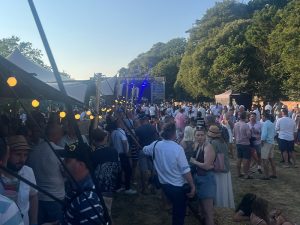
Events and opportunities to connect beyond traditional professional networking settings.
Sometimes the brief doesn’t exist yet
Community work offers something else: the chance to be present before there is a project at all. At a local meeting, people might talk about an empty building, a missing facility or their aspirations for the neighbourhood. An architect who asks good questions, names the constraints and sketches what could happen next turns a vague wish into something people can act on. There’s no guarantee of a commission. But it shows the value of architectural thinking before anyone has decided they need an architect, and people remember who helped them see what was possible.
Picture a village hall committee meeting. The hall is damp, the kitchen is too small for the lunch club, and someone has heard there might be lottery funding available. An architect in the room doesn’t pitch. She asks how many people use the hall each week, whether the roof has ever been surveyed and who owns the land. By the end of the evening, the committee has a list of three things to find out before applying. Eighteen months later, when the funding comes through and they need someone to design the refurbishment, they already know who to call.
Before the next ticket
Industry breakfasts still have their place. Just go knowing why. Before booking, ask who will be in the room, what you want to learn from them and how you’ll follow up.
Then try this. List your last ten enquiries and trace where each one really came from. The answer will tell you which rooms are worth entering, and it may not be the one with the pastries.
معلومات إضافية
Gigi King is a Part 2 Architectural Designer with experience in architectural studios across London and Devon. Educated at Kingston University and Oxford Brookes, she is a regular contributor to Beedier’s editorial and research team, exploring architectural practice and developments across the industry.
 English
 Spanish
 Portuguese
 French
 German
 Italian
 Japanese
 Arabic
 Chinese