


بواسطة
La Colectiva: المهندسون المعماريون يصبحون مطورين وعملاء وسكاناً
أنشأت ثماني أسر في بوينس آيرس مبنى تعاونياً تحدي فيه الملكية الجماعية، والمساحة المشتركة، وقيم إعادة البيع المتحكم بها، الافتراضات التقليدية حول كيفية تطوير الإسكان وتكليفه
In Boedo, Buenos Aires, eight households have taken on roles normally divided between client, developer, architect and resident. La Colectiva was created by members of Proyecto Habitar with friends, colleagues and families, who collectively developed, own and manage the building.
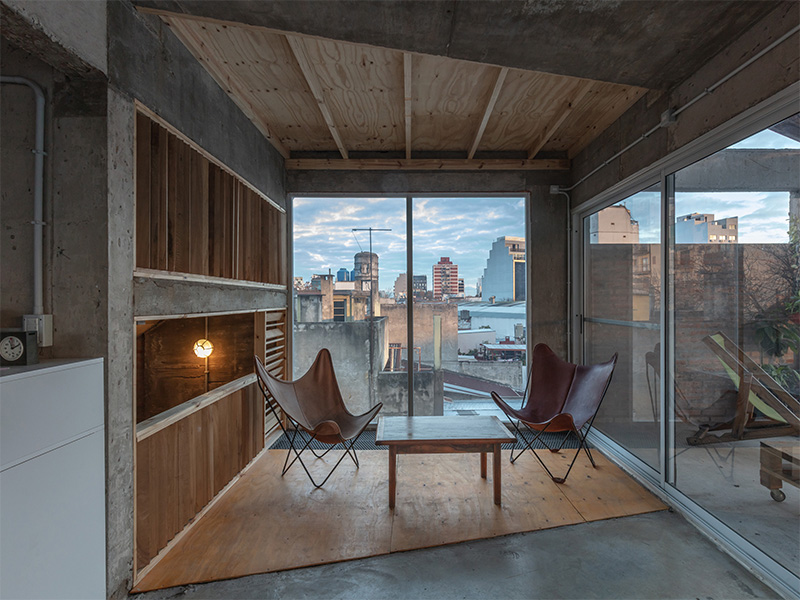
www.proyectohabitar.org
Completed between 2021 and 2023, La Colectiva contains around 800 square metres of enclosed accommodation, divided equally between private homes and communal uses. Shared kitchens, living areas, terraces and laundry facilities sit alongside courtyards and an education space used by Proyecto Habitar.
Rather than maximising saleable residential floor area, half of the building is effectively given over to collective life.
The more unusual proposition is economic. Homes are allocated according to their original cost and can subsequently change hands while remaining tied to that value. Owners therefore cannot simply sell into the open market and capture the speculative uplift in property prices. The intention is to preserve the affordability and collective purpose of the development over time.
That approach has particular relevance in Boedo, an established neighbourhood experiencing new development and pressure on land values. La Colectiva does not reject development or greater urban density; instead, it questions the assumption that the value they generate must ultimately be realised through private property speculation.
The project is attracting wider professional interest. Buenos Aires’ Consejo Profesional de Arquitectura y Urbanismo has presented La Colectiva as a case study in alternative forms of housing production, examining how cooperative models can challenge conventional relationships between architecture, property and finance.
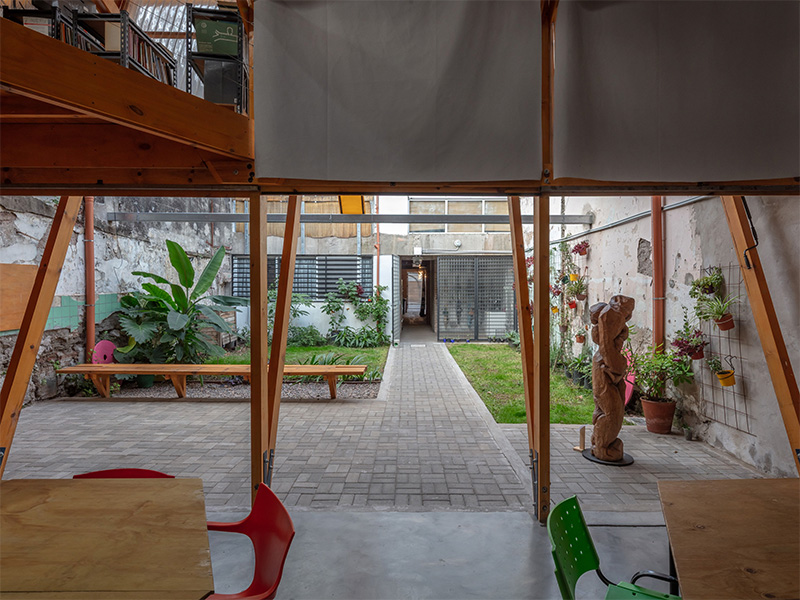
www.proyectohabitar.org
At only eight homes, La Colectiva is not a blueprint for solving housing affordability. Its wider relevance lies in the development process itself. Architects are usually commissioned after many of a project’s defining conditions — land, finance, ownership, programme and client — have already been established. Here, the architects participated in creating those conditions.
New work does not necessarily have to begin with a developer issuing a brief. La Colectiva shows how architects can help create the conditions from which a commission emerges.
For practices exploring new forms of development, that is perhaps La Colectiva’s most transferable idea. The project suggests that architectural business development can extend beyond competing for existing commissions to identifying opportunities, assembling participants and helping establish new models through which architecture can happen.
Further reading
La Colectiva: arquitectura para la vida compartida — Proyecto Habitar
Architecture and cooperativism in Buenos Aires — CPAU
 English
 Spanish
 Portuguese
 French
 German
 Italian
 Japanese
 Arabic
 Chinese